
The Central Bank of the UAE lists AED 5, 10, 20, 50, 100, 200, 500 and 1,000 banknotes in current circulation. Newer polymer notes and earlier paper issues can sit beside each other, so a different material does not mean a different value.
The eight-note color ladder
The Central Bank's current family mixes newer polymer issues with older paper designs. The scenes below are recognition cues, not a replacement for checking the printed value and security features.
| Value | Main color | Material in the newer family | A scene to remember |
|---|---|---|---|
| AED 5 | Brown | Polymer | Ajman Fort and Dhayah Fort |
| AED 10 | Green | Polymer | Sheikh Zayed Grand Mosque and Khor Fakkan Amphitheatre |
| AED 20 | Blue | Paper | A useful everyday note from the established paper family |
| AED 50 | Violet | Polymer | The Founding Fathers, Wahat Al Karama and Etihad Museum |
| AED 100 | Red | Polymer | Umm Al Quwain Fort, Port of Fujairah and Etihad Rail |
| AED 200 | Yellow-brown | Paper | The warm-colored high-value note in the established family |
| AED 500 | Blue | Polymer | Terra, Museum of the Future and the Dubai skyline |
| AED 1,000 | Brown | Polymer | The Hope Probe and Barakah Nuclear Energy Plant |
Paper money
UAE dirham notes now mix earlier paper issues with bright polymer designs, so colour, denomination and familiar landmarks matter more than the material alone.
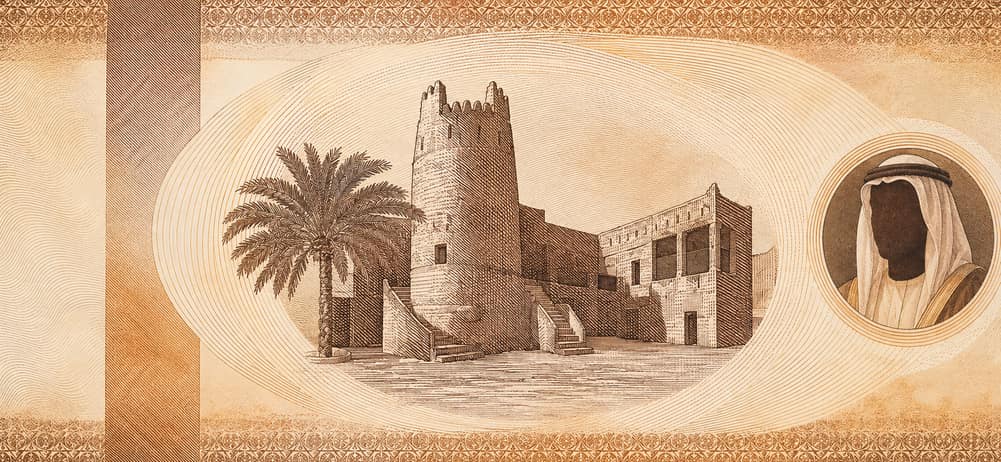

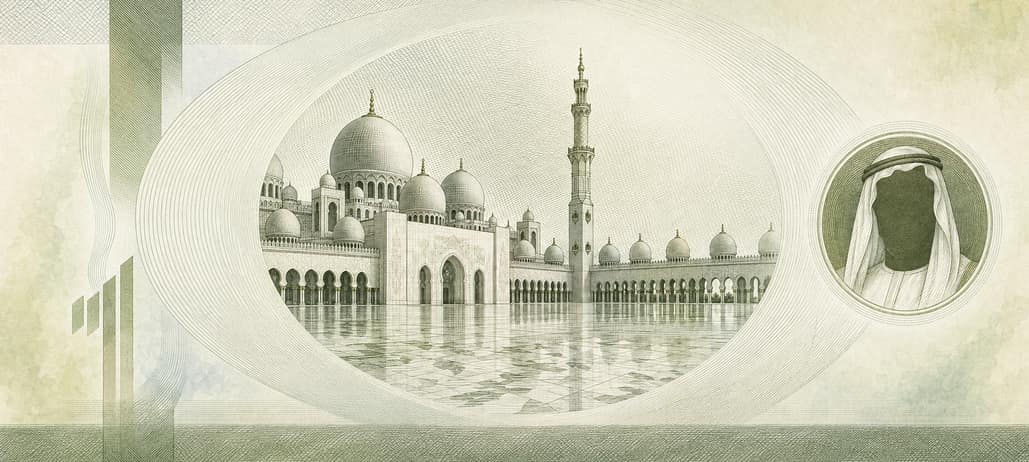
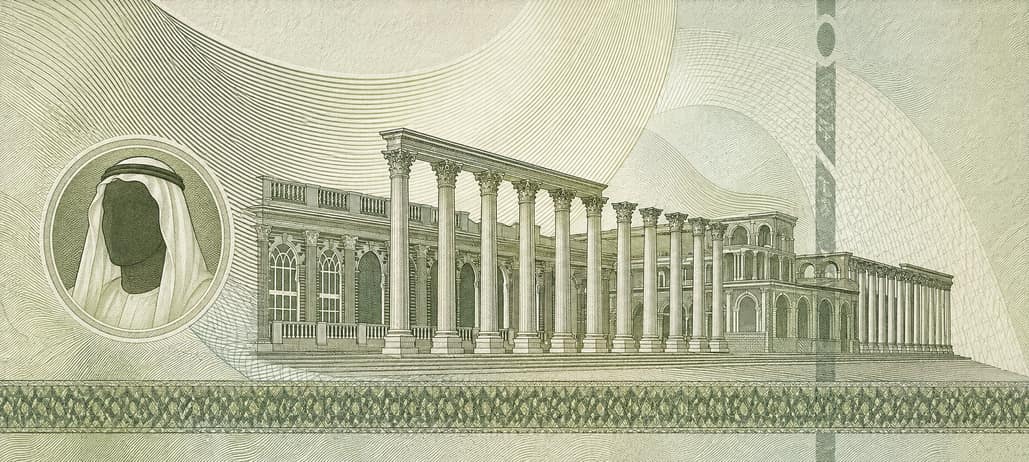
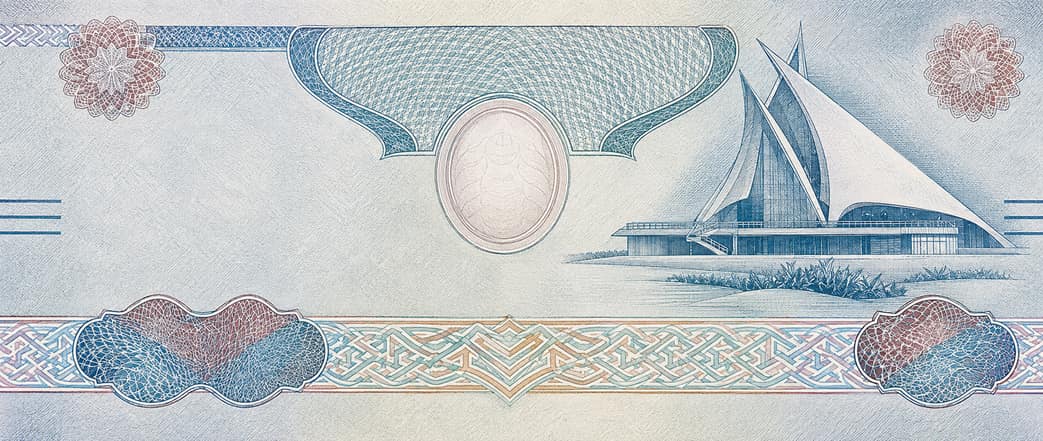
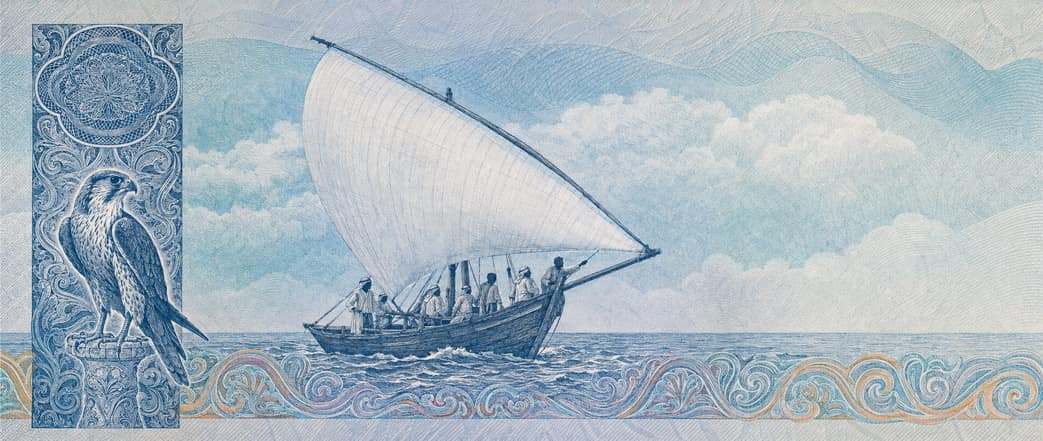
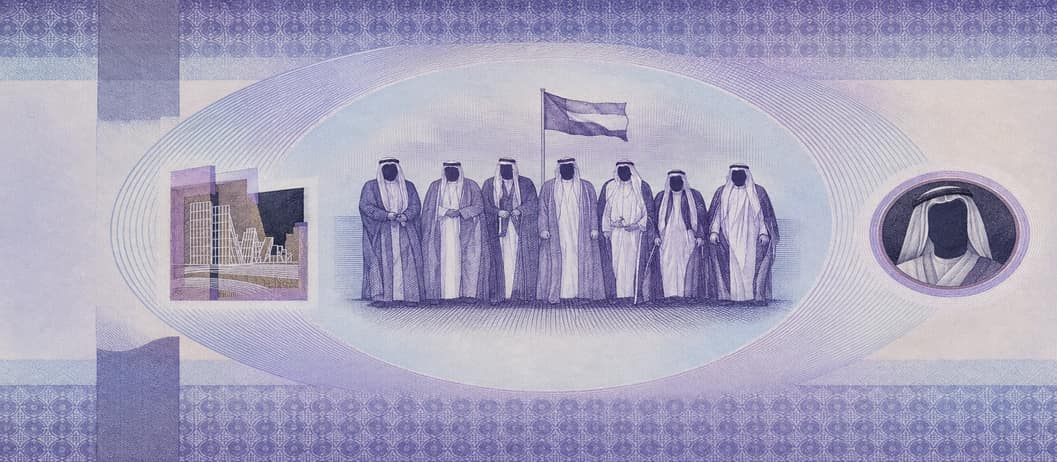

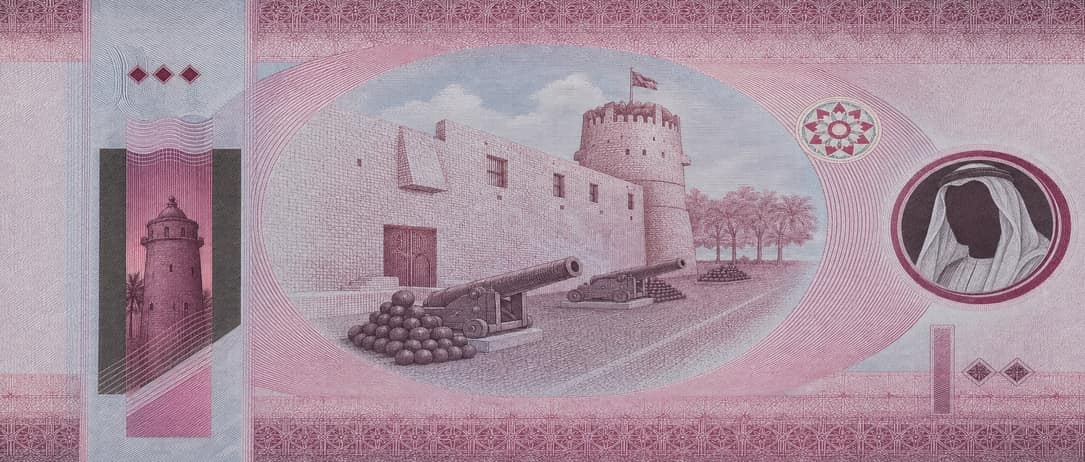

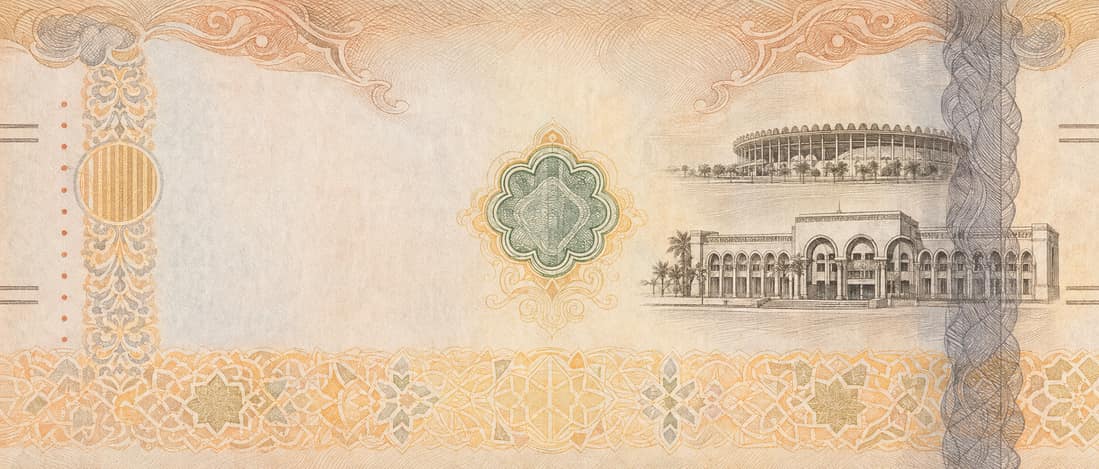
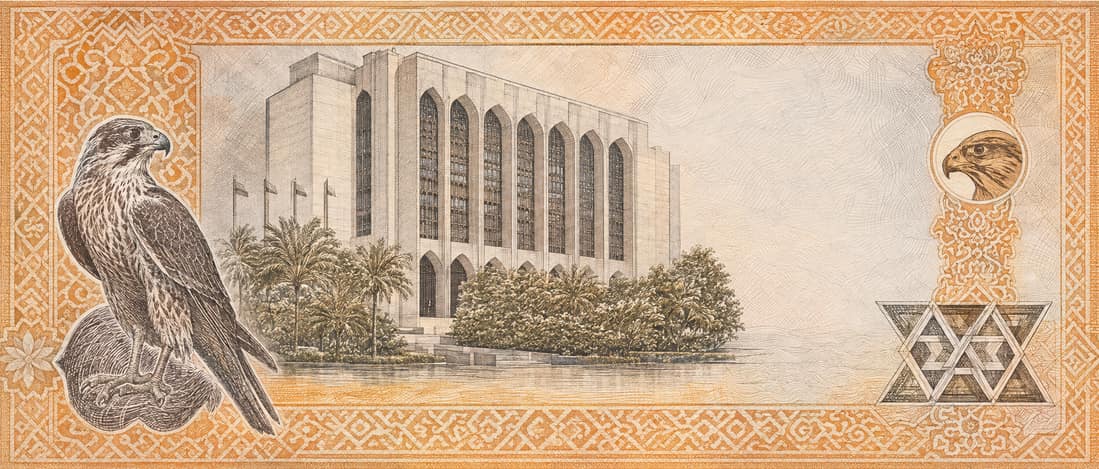
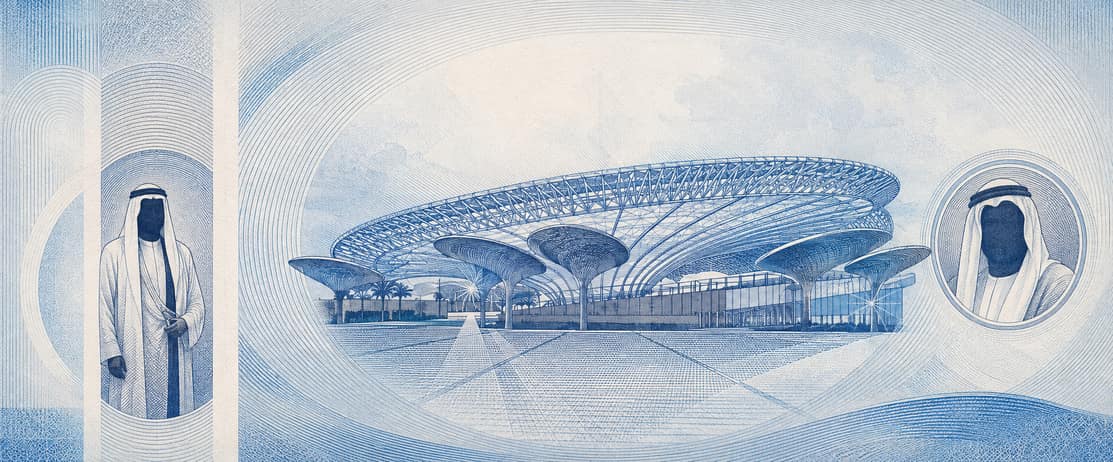



UAE dirham notes bring together forts, mosques, ports, transport and national ambition, with newer polymer issues adding brighter colour and contemporary detail. Cash by Country artwork is an original, simplified interpretation and is not legal tender.
One dirham, 100 fils
One dirham contains 100 fils. The circulated coin family contains 1, 5, 10, 25 and 50 fils plus the 1 dirham coin. The 50 fils piece is the easy shape clue: it has seven sides, while the 25 fils and 1 dirham coins are round and silver-colored.
Read both faces before spending
UAE notes carry Arabic and English text, and the numeral style can look unfamiliar at first glance. Turn the note, find the large value on both sides and use color only as the first clue. This matters most with the blue AED 20 and AED 500 notes and the two brown polymer values.
- Sort small notes from large notes before a busy taxi or checkout.
- Confirm the printed value rather than relying on color alone.
- Keep AED 500 and AED 1,000 notes separate until a large purchase needs them.
- Use the seven-sided 50 fils coin as the quickest pocket-shape clue.
Polymer and paper can both be genuine
Polymer editions now exist for AED 5, 10, 50, 100, 500 and 1,000. Earlier paper notes remain in circulation alongside them, so a traveler may receive two noticeably different materials in one transaction. Polymer feels smoother, resists water and often includes a clear window. Use the Central Bank links on the illustrated notes when you want to compare official designs and security information.
What to keep near the front of the wallet
AED 5, 10, 20 and 50 are the practical change-making notes. AED 100 is useful for a larger meal, ride or supermarket visit. AED 200, 500 and 1,000 can be awkward for a small vendor, so do not rely on a high-value note for water, a tip or a short taxi ride.