
The Polish złoty does not scatter unrelated portraits across its values. Start with Mieszko I on the 10-złoty note and climb through dynasties, crowns and castles until Jan III Sobieski reaches the 500. The colour changes, the note grows and a different tactile mark helps identify each step.
Paper money
Polish zloty notes follow a royal timeline, with each colour and value introducing another ruler from the country's long history.

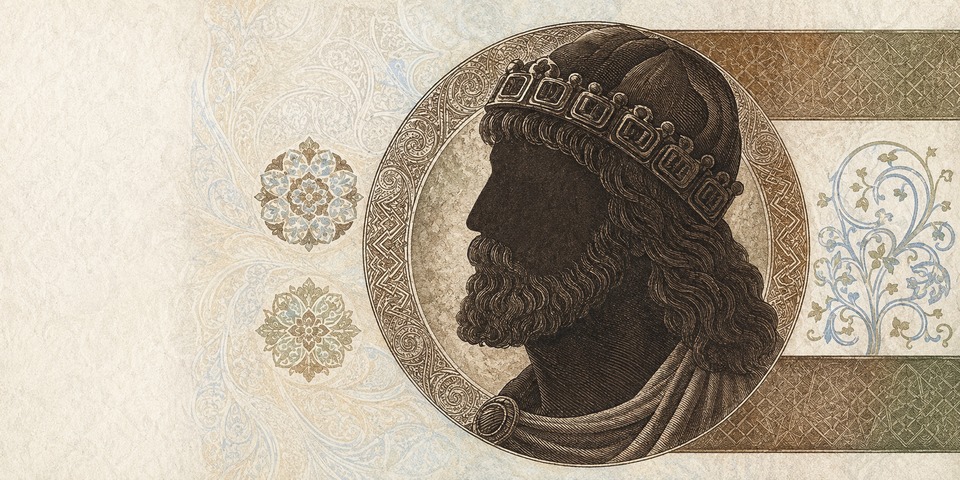


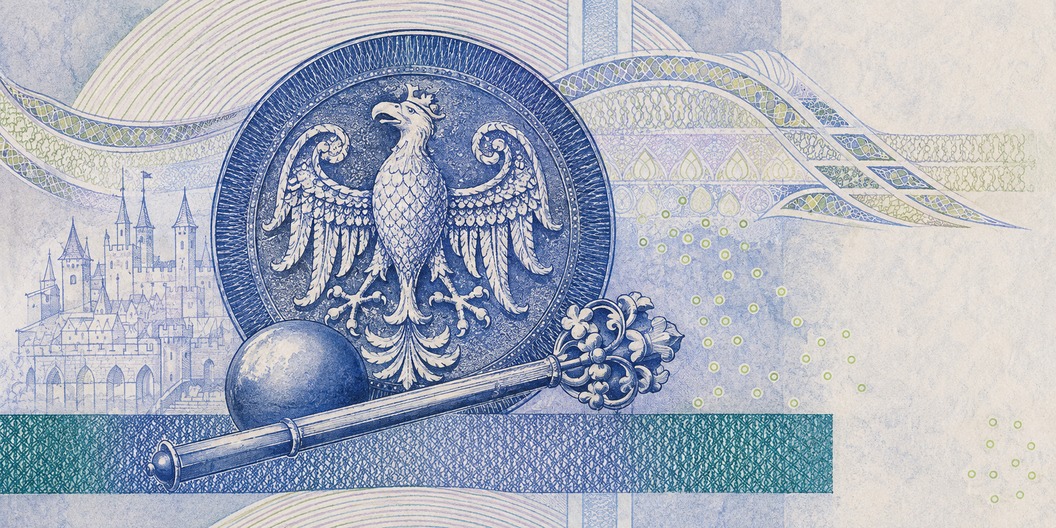
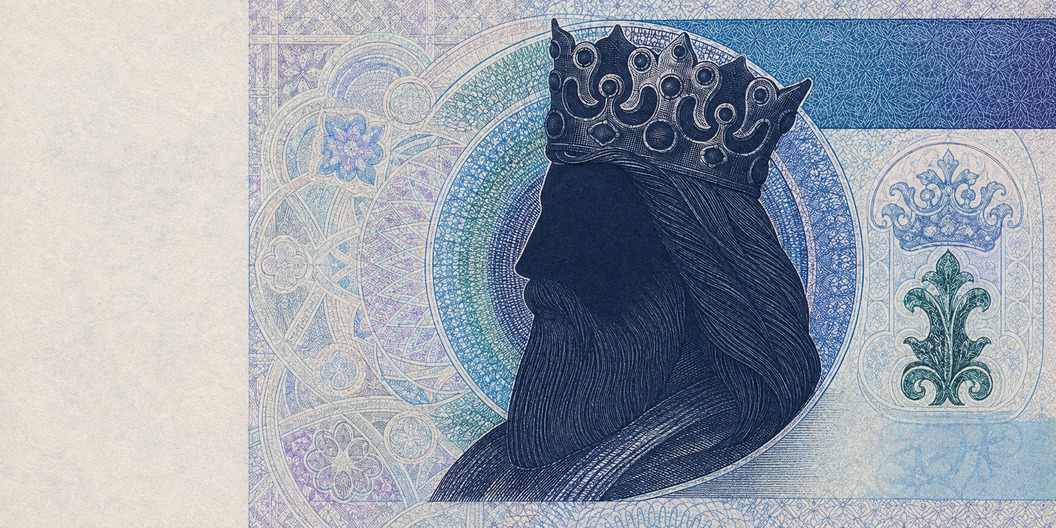

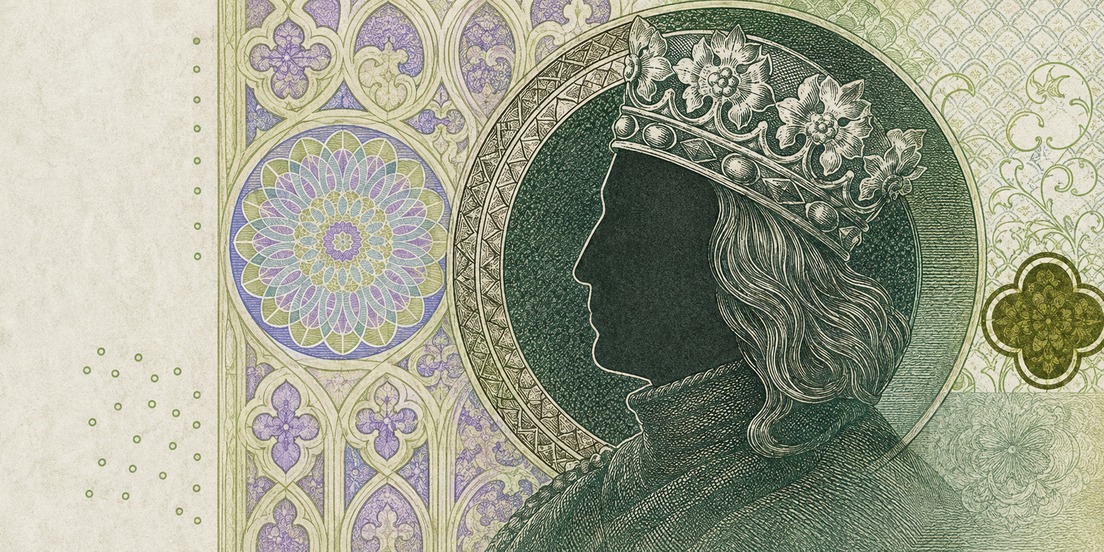


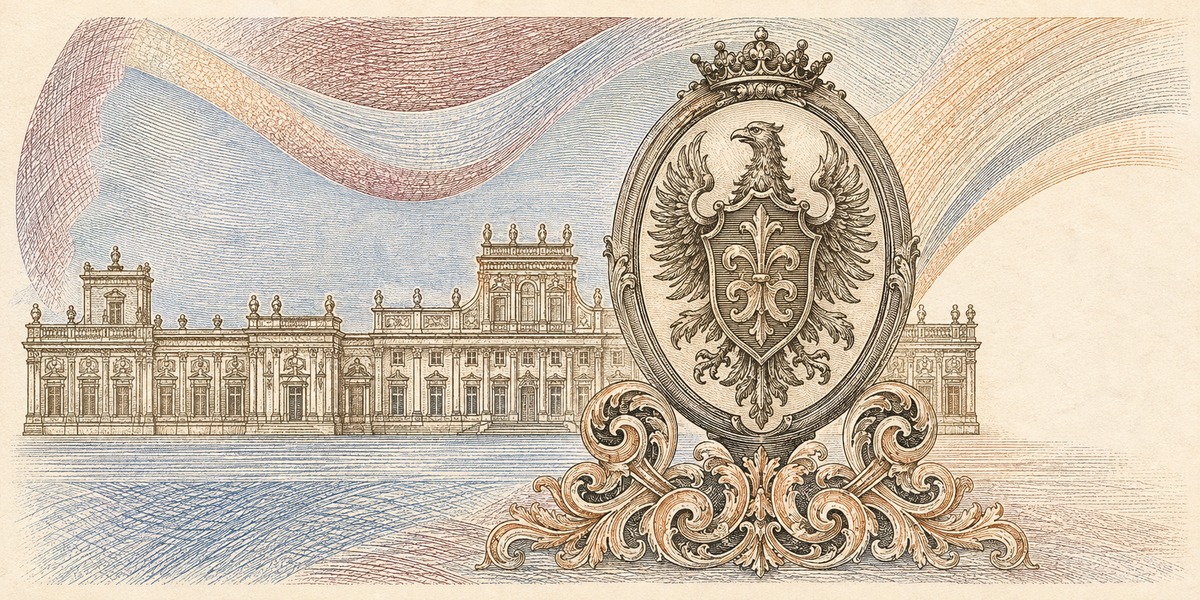
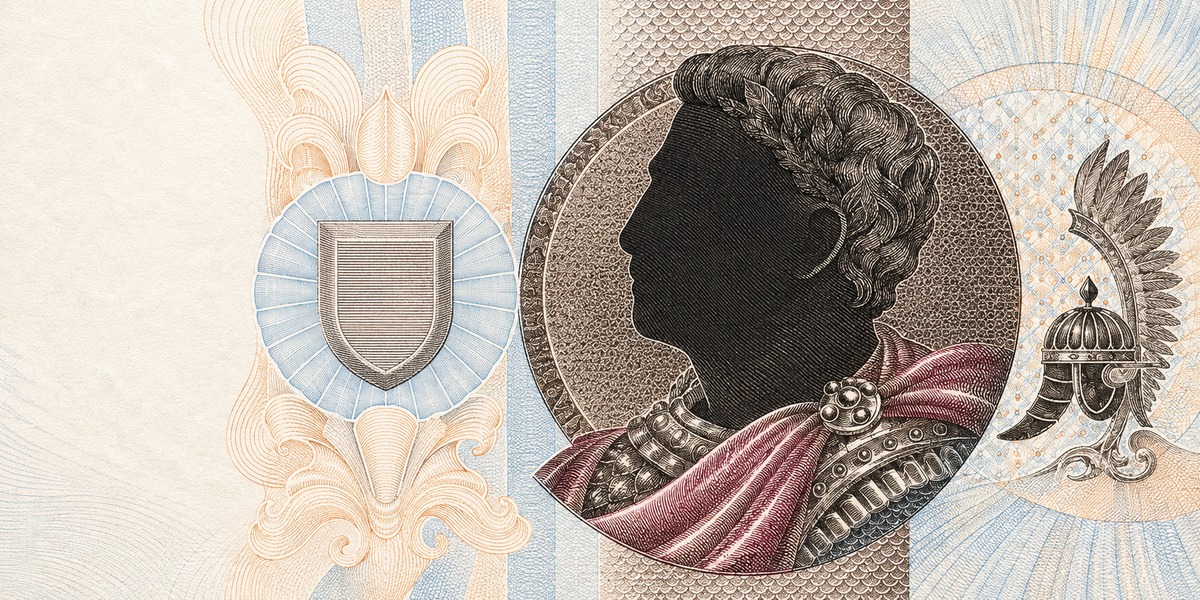
Poland's notes form a royal timeline, moving through rulers from Mieszko I to John III Sobieski alongside coins, castles, eagles and other symbols of their eras. Cash by Country artwork is an original, simplified interpretation and is not legal tender.
Read the banknotes as a royal procession
The reverse finishes each reign
Architecture, seals, crowns, coats of arms and historic objects on the back connect each ruler to a period rather than treating the portrait as a floating face. The 500-złoty note, for example, pairs Sobieski with Wilanów Palace and a crowned eagle from his family arms.
Five simple shapes and two rows of squares guide the fingers
Look, tilt and touch before trusting one clue
NBP's modernised notes combine raised intaglio print, watermarks, security threads, see-through elements and inks that change or reveal movement when tilted. Counterfeit checking works best as a sequence: feel the raised areas, hold the note to light and then tilt it.
Nine coins make grammar visible
Polish changes the noun after the number: 1 grosz, 2 grosze and 5 groszy; 1 złoty, 2 złote and 5 złotych. The coin labels in the explorer use those real forms. Copper-coloured small grosz pieces, silver-coloured 10-50 groszy and bimetal 1-5 złoty create a useful visual ladder.
The white eagle belongs to every coin
The denomination and plant ornament sit on one side, while the crowned state eagle appears on the other. The 1- and 5-złoty coins can look similar at a glance because both are bimetallic, so check the centre-ring colour order and the large number before handing one over.
A collector note can be real money and still be a curiosity
NBP also issues limited collector banknotes and commemorative coins that are legal tender at their printed face value. They are usually worth more to a collector than at a checkout. If an unfamiliar vertical or commemorative 20-złoty note appears, verify it with NBP rather than comparing it only with the everyday series.