
New Zealand cash rewards a second look. Each note introduces a notable New Zealander on the front and a native bird on the reverse, with landscape and plant details connecting the two. The bright polymer series is practical in a wet jacket pocket, but its real charm is the way five denominations become five compact stories about Aotearoa.
Paper money
New Zealand's polymer notes pair bright colours with local birds, landscapes and people, while transparent windows make each value feel unmistakably Kiwi.
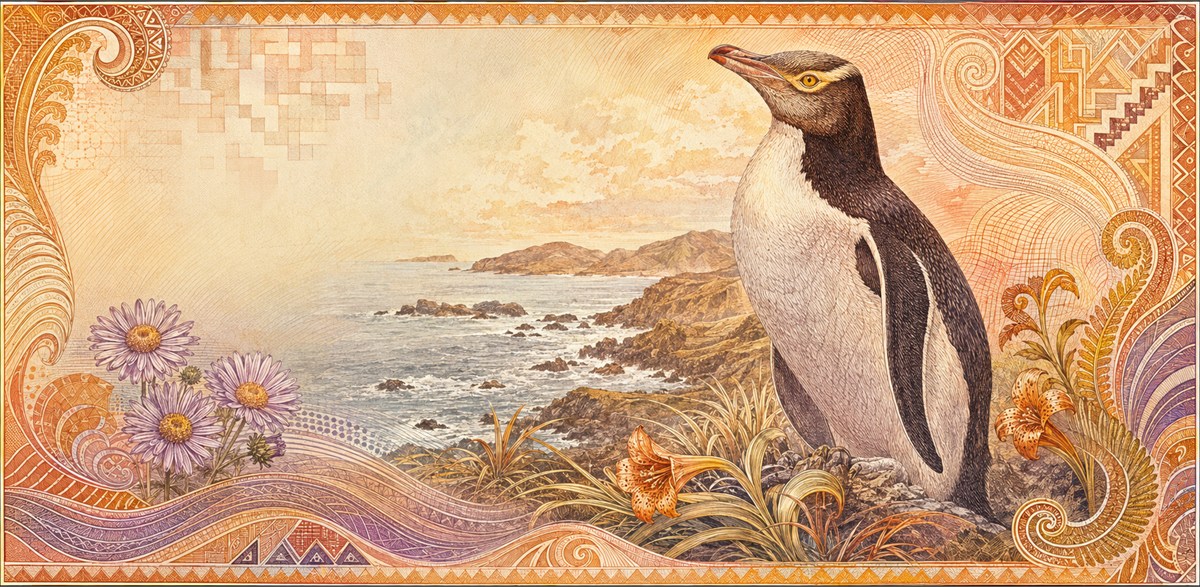

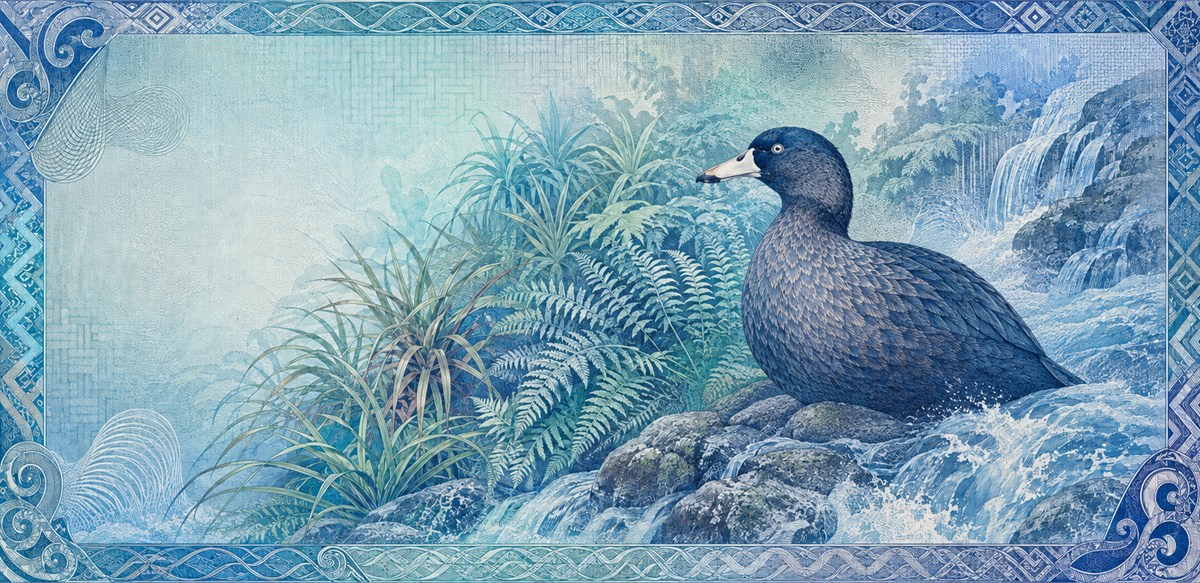
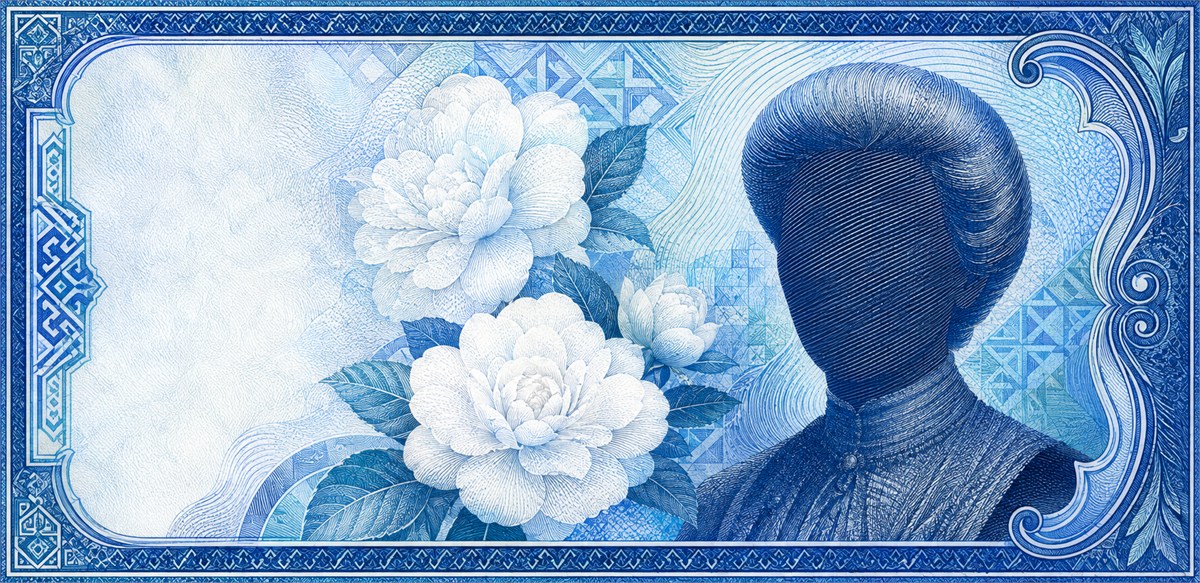
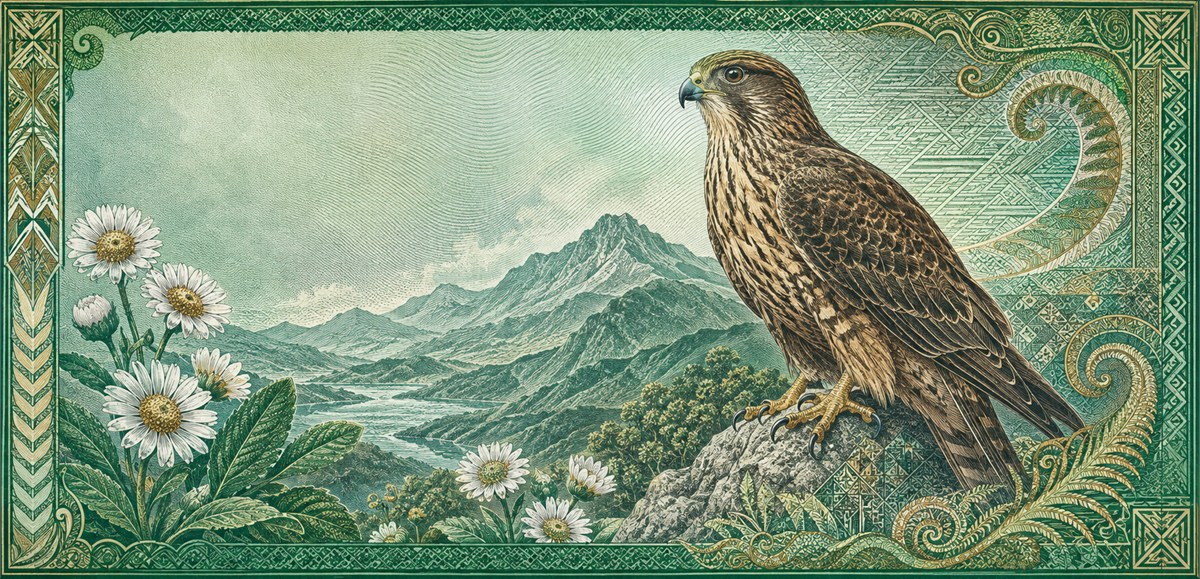
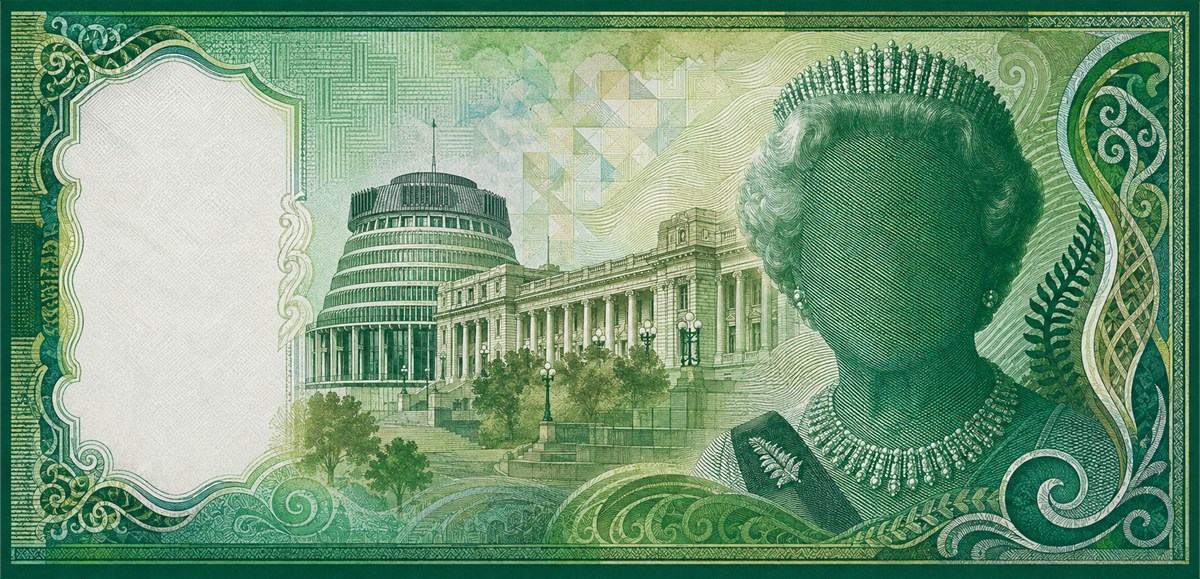

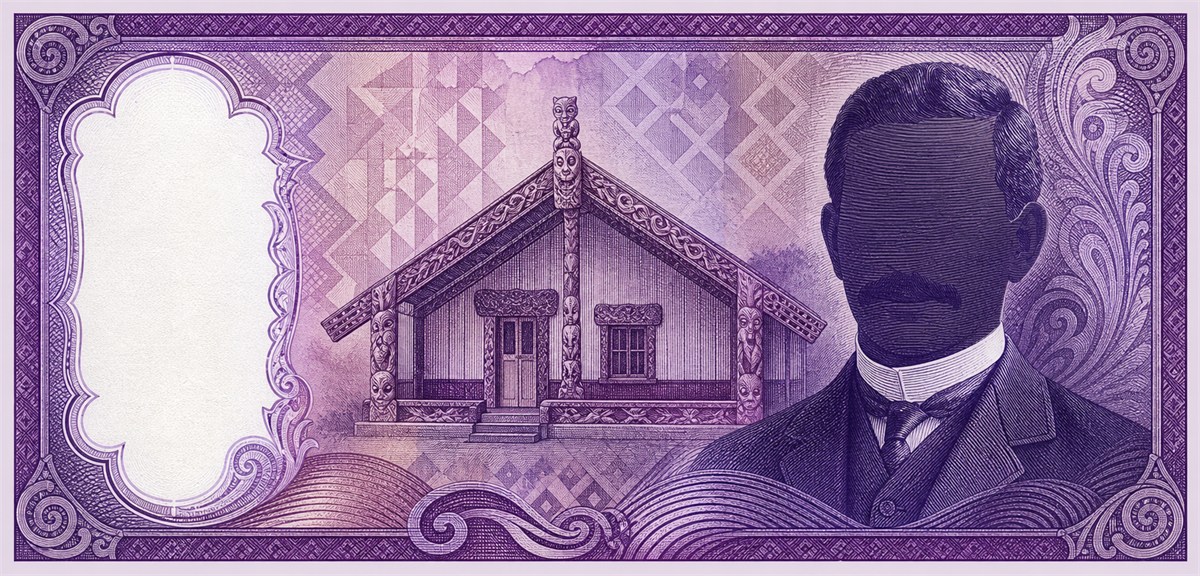
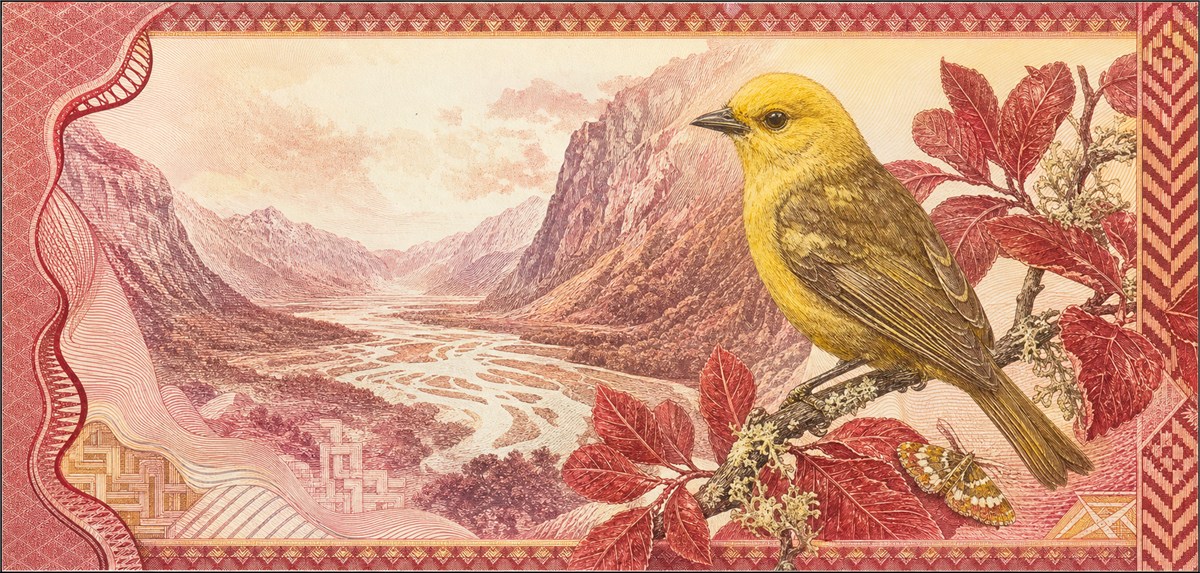
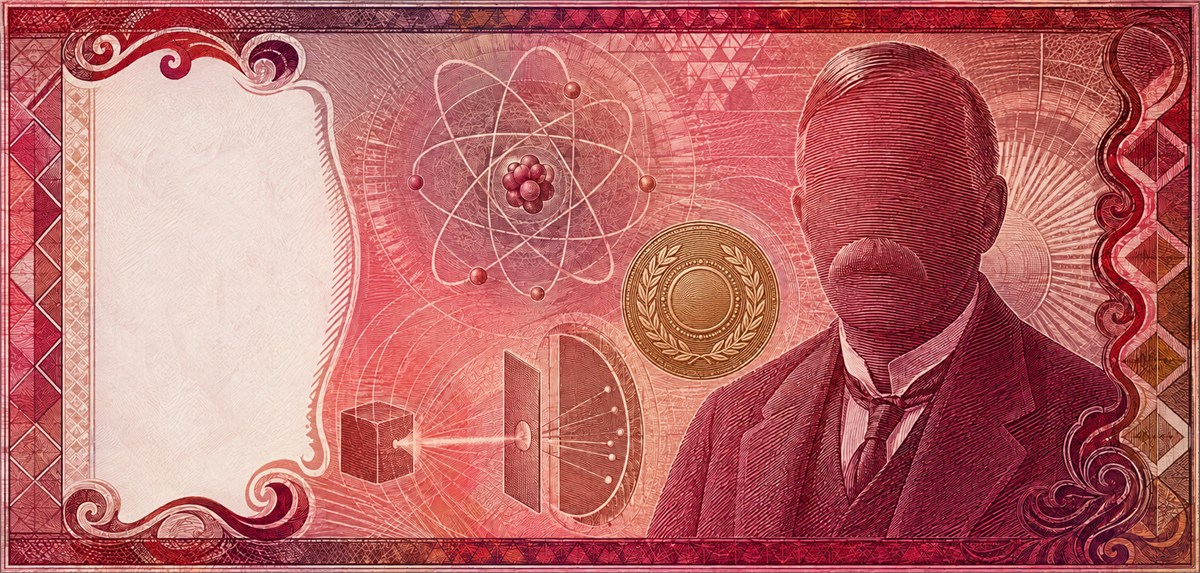
New Zealand's notes pair notable people with native birds and landscapes, from the hoiho beneath Aoraki to the whio, karearea, kokako and mohua. Cash by Country artwork is an original, simplified interpretation and is not legal tender.
Five notes make five memorable pairings
Turn the note over to complete the story
The portraits are only half the design. Hillary's $5 reaches from Aoraki / Mount Cook to the yellow-eyed penguin; Kate Sheppard's $10 moves from the suffrage leader to the blue duck; and Sir Apirana Ngata's $50 connects Māori leadership with the kōkako. Learning the bird is often the quickest way to remember the colour and value.
Polymer makes the window part of the picture
The clear window is not an empty patch. Tilt a Series 7 note and inspect the colour-changing bird, the puzzle number formed through the window and the raised print. A genuine note should offer several features that agree with one another. Colour alone is useful for sorting a wallet, but it is not the whole security check.
Aotearoa is written into the newer series
Series 7 uses more te reo Māori, including Aotearoa and Te Pūtea Matua, the Reserve Bank's Māori name. The larger numerals and stronger contrast also make values easier to distinguish. Older Series 6 notes are duller and still valid, so do not mistake an earlier design for expired cash.
The coins carry another miniature field guide
The copper-coloured 10-cent coin shows a carved koruru. The 20-cent coin features Pūkaki, an important 18th-century Māori warrior and rangatira. The 50-cent coin pairs the Endeavour with Mount Taranaki, while the $1 carries a kiwi and silver fern and the $2 features a kōtuku, or white heron.
Start with notes and coins you can actually spend
Small shops and market stalls appreciate spendable change. Keep $5, $10 and $20 notes together with a few $1 and $2 coins, then leave the $50 and $100 notes for purchases that naturally produce change. The smallest current coin is 10 cents, which matters when a cash total ends in an odd number of cents.