
Australian money is unusually good at introducing itself. The five banknotes have strong colour families, the two highest-value coins are gold-coloured, and the words you hear at a counter are wonderfully plain: five-dollar note, fifty-cent piece, one-dollar coin.
Paper money
Australian dollars are colourful polymer notes with transparent windows, native stories and clear denomination bands that make each value stand apart.
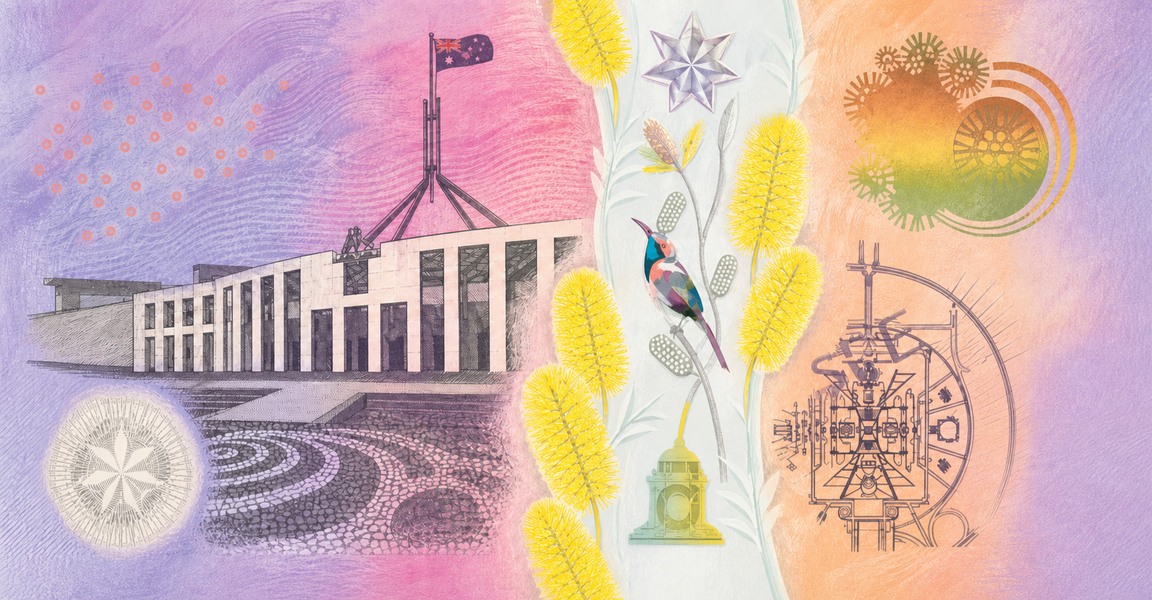



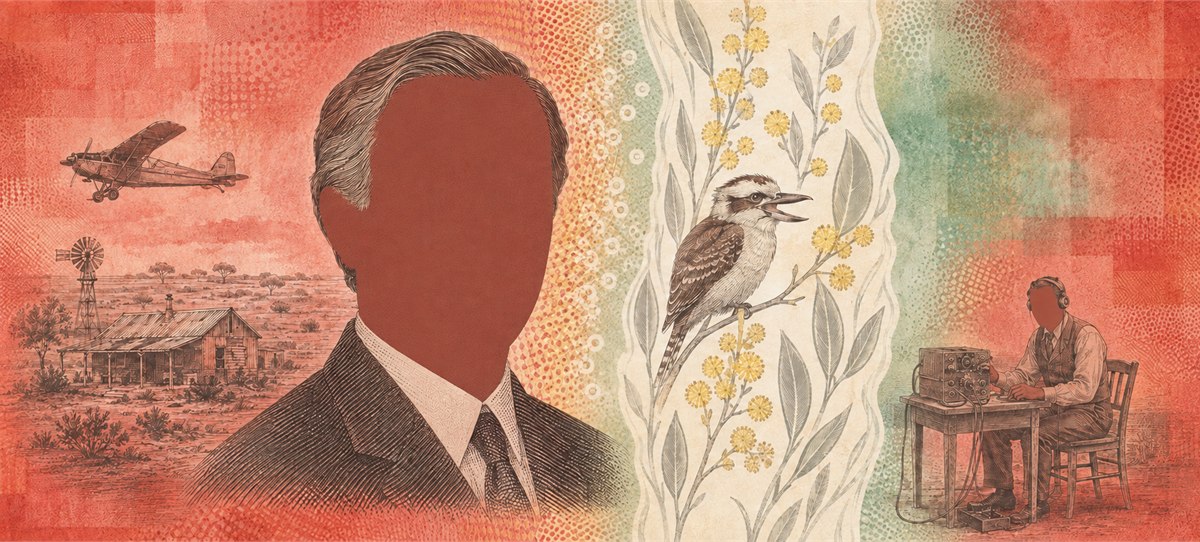

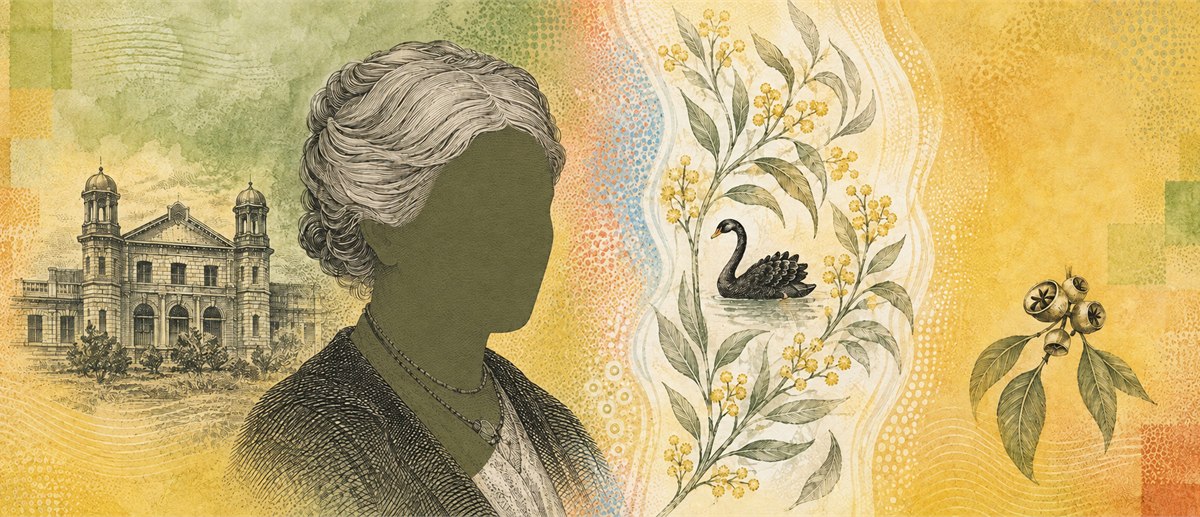
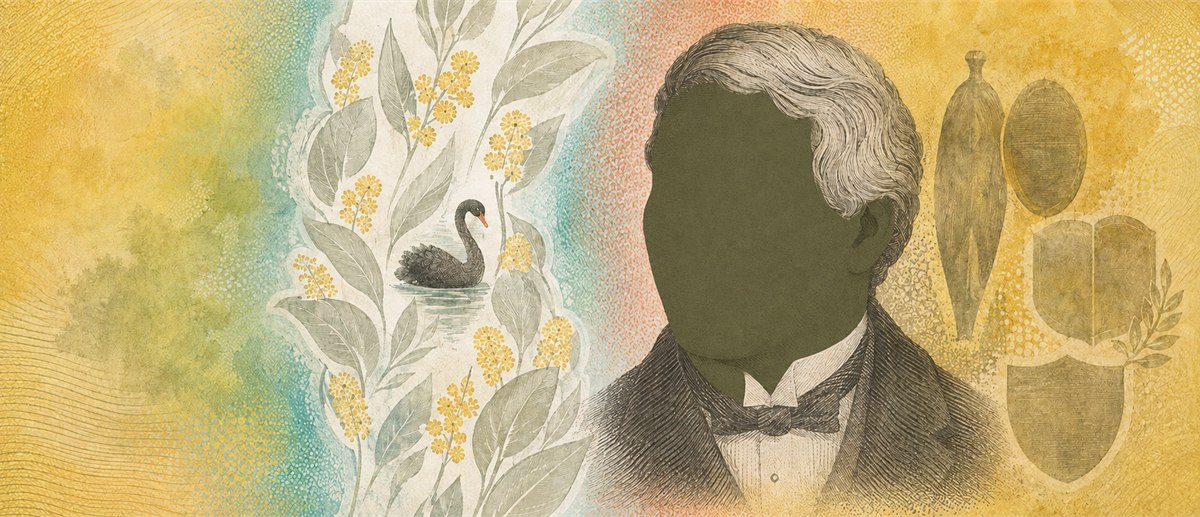
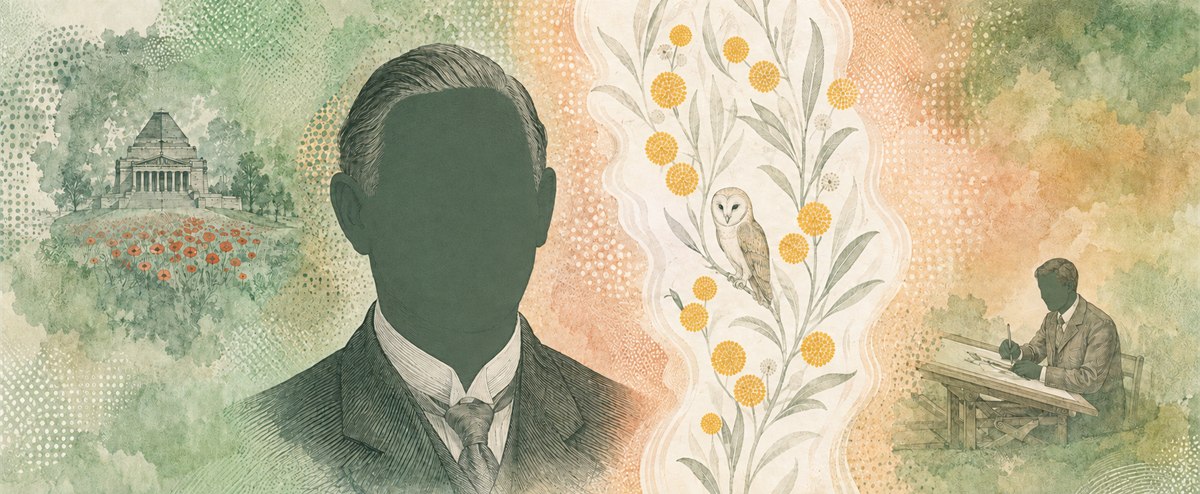

Australia's polymer notes weave notable Australians together with native plants, birds, buildings and achievements, all arranged around a distinctive transparent window. Cash by Country artwork is an original, simplified interpretation and is not legal tender.
The banknote that learned to swim
Australia's Reserve Bank and CSIRO developed polymer banknote technology, and Australia became the first country to issue a complete circulating series on polymer. The material makes the notes durable and gives designers a transparent window that is difficult to imitate.
Five colours do most of the work
The current series moves from mauve AUD 5 through blue AUD 10, red AUD 20, yellow AUD 50 and green AUD 100. Colour is a quick first clue, but confirm the printed value, window and size rather than identifying a note from colour alone.
Raised bumps give the notes another language
The current notes include tactile features near an edge. The number of raised bumps changes with the denomination, helping people with low vision distinguish values and giving any traveller one more physical check in poor light.
The five-cent finish
The rounding applies to the total bill, not to every individual item. One and two cents round down, three and four round up; six and seven round down, while eight and nine round up. It should even out over many purchases rather than act as a hidden fee.
Gold is a colour, not a fortune
The compact AUD 2 coin is worth more than the larger AUD 1 coin, which can surprise a new arrival. The 50c piece is the easiest silhouette in the pocket: it has twelve flat sides rather than a smooth circle.
Cash still has a backup job
Reserve Bank research found cash represented 15% of consumer payments in 2025, yet about half of Australians still used it at least weekly. Keep some for a terminal outage, a remote stop or a small business, especially when the next bank ATM is far away.