
One Thai baht is divided into 100 satang. The everyday note family is 20, 50, 100, 500 and 1,000 baht. Coins commonly run from 25 and 50 satang through 1, 2, 5 and 10 baht.
Five notes, one color rhythm
| Note | Fast color cue | Travel-wallet role |
|---|---|---|
| ฿20 | Green | Small food, short rides and useful change |
| ฿50 | Blue | A flexible small note that is worth keeping |
| ฿100 | Red | The everyday workhorse for markets and casual meals |
| ฿500 | Purple | Mid-size purchases; sometimes awkward for tiny sales |
| ฿1,000 | Brown | Common from ATMs, but not ideal for the first small purchase |
Paper money
Thai baht notes use vivid colours, royal portraits and detailed architecture, making the 20, 50, 100, 500 and 1,000 baht easy to distinguish.
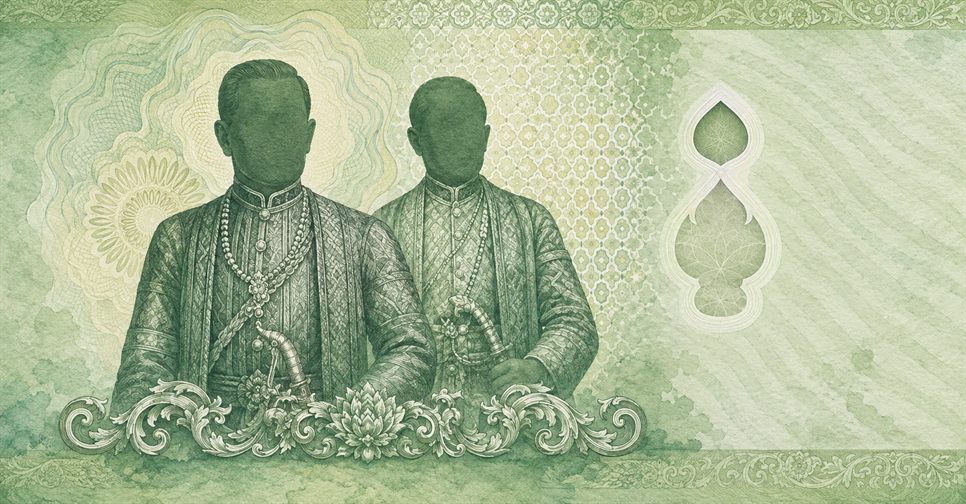
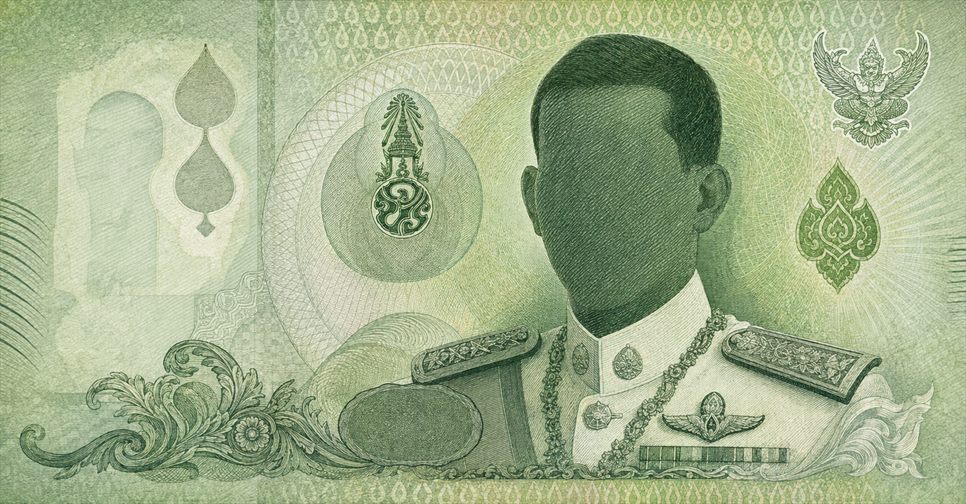
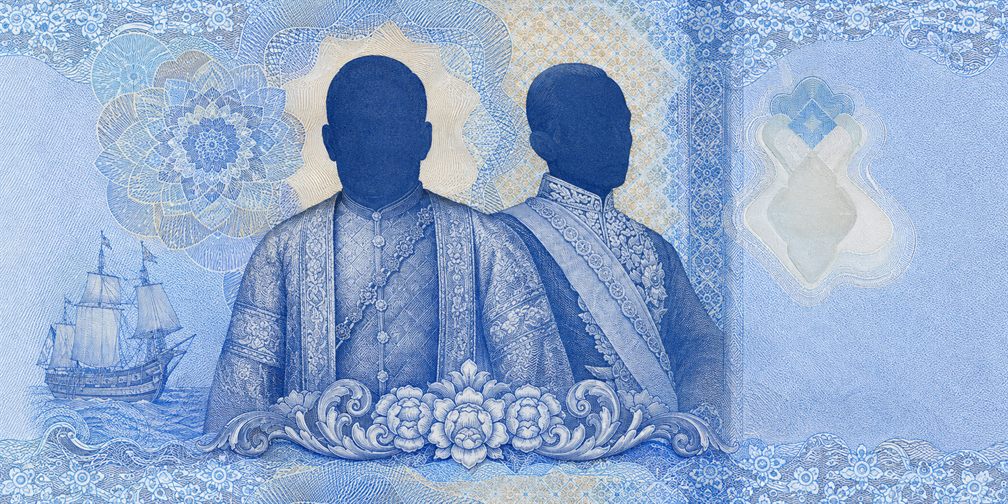
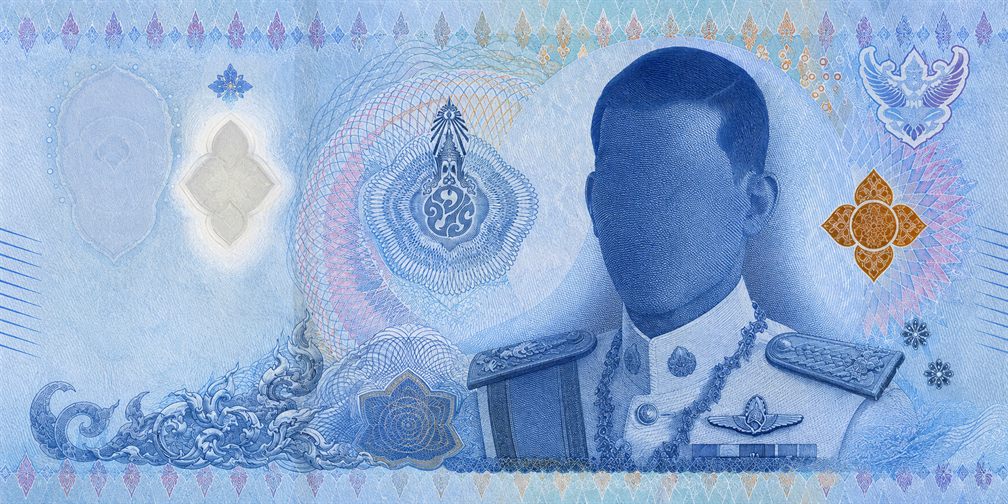
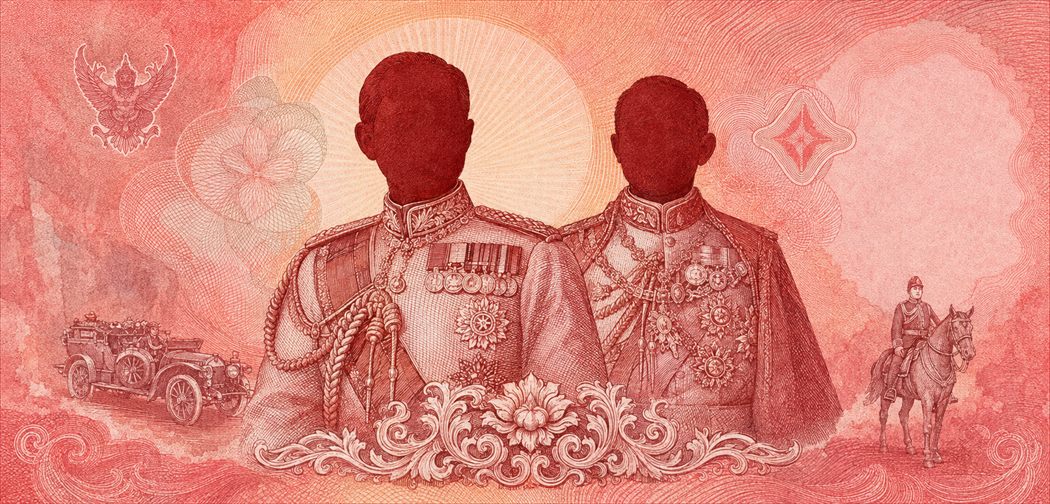
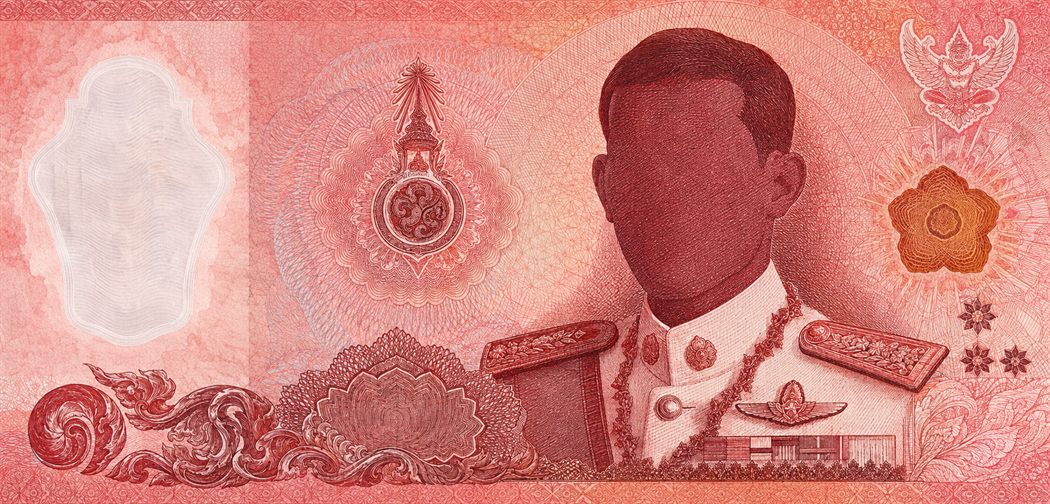
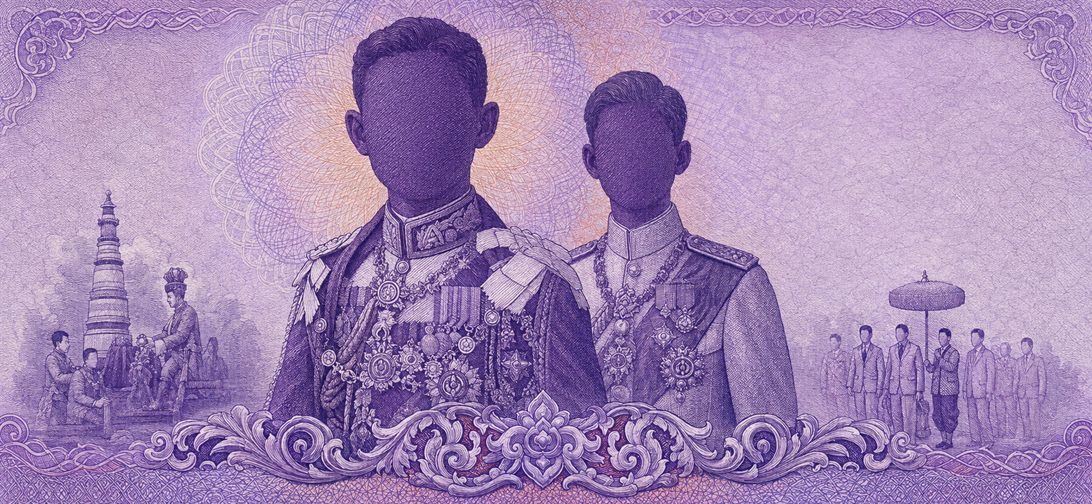
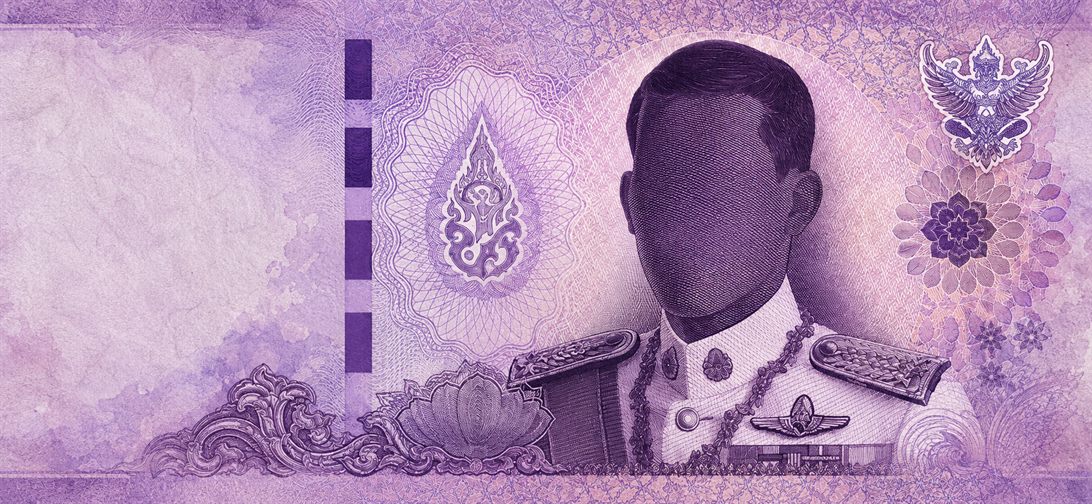
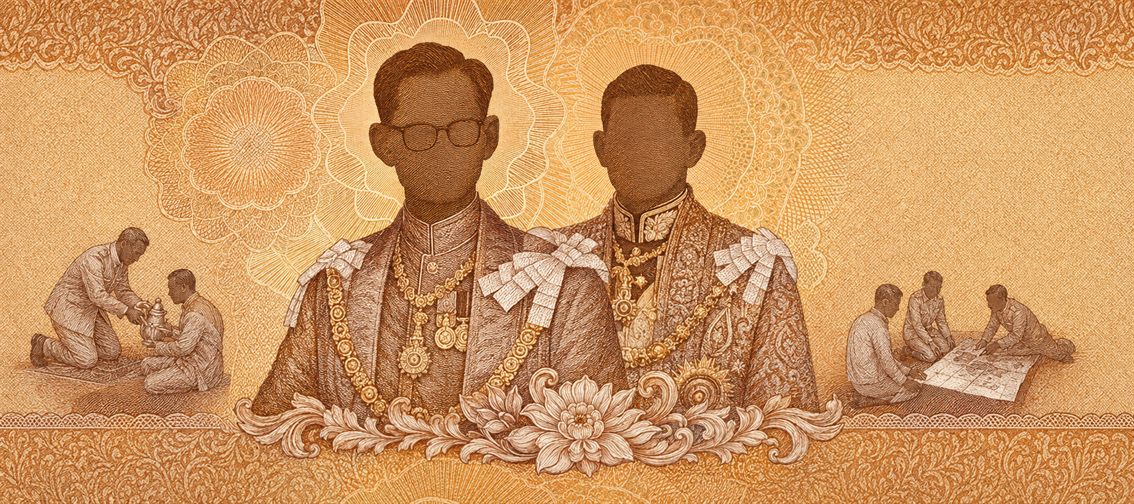
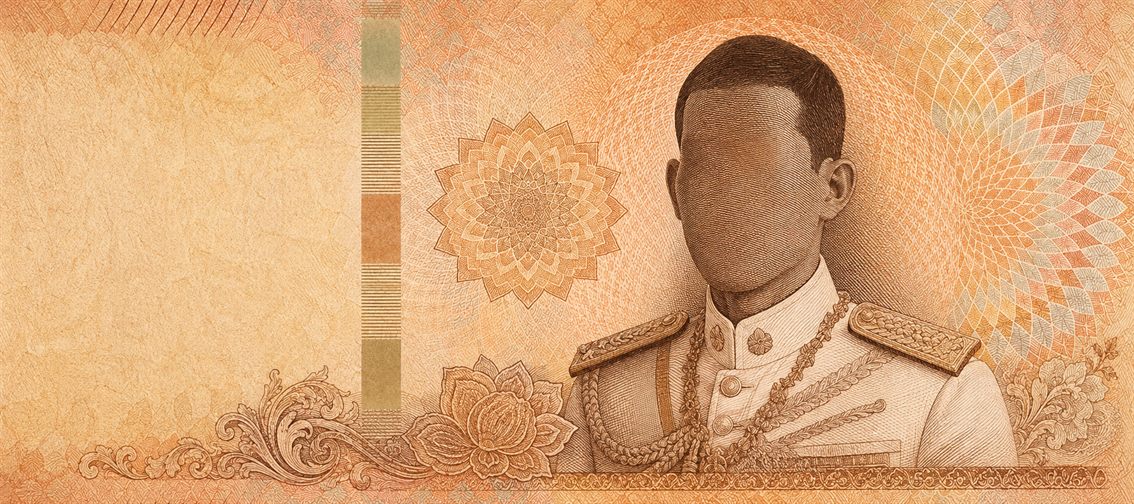
Thai banknotes combine the reigning monarch with royal history, architecture and national heritage. Our people remain silhouettes while the surrounding layout carries the visual story. Cash by Country artwork is an original, simplified interpretation and is not legal tender.
New polymer has joined familiar paper
Thailand began issuing a polymer 20 baht note in 2022. Polymer 50 and 100 baht notes followed on 21 November 2025. Their paper versions remain usable, which means travelers can currently receive more than one material for the same denomination without either note being wrong.
The front begins with Rama X
Series 17 notes show King Maha Vajiralongkorn, Rama X, on the front. The reverse tells a longer dynastic story: lower denominations begin with the early Chakri kings and the sequence moves forward until the 1,000 baht note depicts Rama IX and Rama X.
That design makes the set feel related even though every denomination has its own color. Our illustrations use original architecture-inspired details rather than reproducing the official portraits or banknote artwork.
The coin shortcut is metal plus size
| Coin | Fast clue | Useful context |
|---|---|---|
| 25 satang | Small, brass-colored | Low-value coin; less prominent in tourist spending |
| 50 satang | Brass-colored, larger than 25 satang | Another fraction of one baht |
| ฿1 | Small, silver-colored | Common change |
| ฿2 | Silver-colored with a distinct size | Check the numeral rather than relying on color alone |
| ฿5 | Larger silver-colored coin | Useful for small totals and change |
| ฿10 | Two-tone, silver-colored ring | The easiest baht coin to spot quickly |
Make the ATM note spendable
An ATM may leave you with large denominations. Before heading to a market stall or small vendor, use a 1,000 baht note at a larger business that can comfortably make change. A small stack of 20s, 50s and 100s is more useful than the same value held only in 500s and 1,000s.
Feel, look and tilt
The Bank of Thailand groups its basic authentication advice into three actions: feel the raised printing, look for features such as the watermark, and tilt the note to see changing security effects. Color is excellent for fast recognition, but official security features are what matter when authenticity is in doubt.