
The practical current note family runs through ₹10, ₹20, ₹50, ₹100, ₹200 and ₹500. The Reserve Bank of India also lists ₹1 government notes and ₹2, ₹5 and ₹2,000 banknotes as legal tender unless withdrawn, although a traveler is most likely to meet the everyday set first.
Everyday note cues
| Note | Fast cue | Travel-wallet role |
|---|---|---|
| ₹10 | Brown-orange | Small purchases and change |
| ₹20 | Yellow-green | Useful small-note layer |
| ₹50 | Blue | Flexible everyday note |
| ₹100 | Lavender | Daily workhorse |
| ₹200 | Yellow-orange | Mid-size spendable value |
| ₹500 | Stone grey | Common ATM value, sometimes too large for tiny sales |
Paper money
Indian rupee notes form a bright Gandhi series, pairing large values with landmarks and regional stories that make the denomination ladder easy to learn.
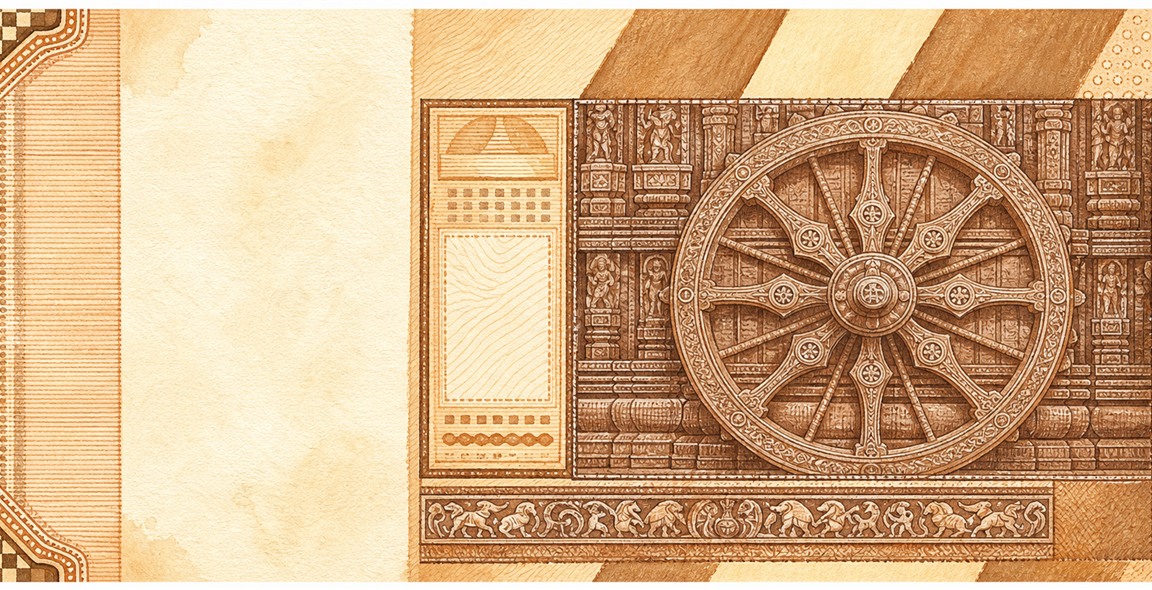
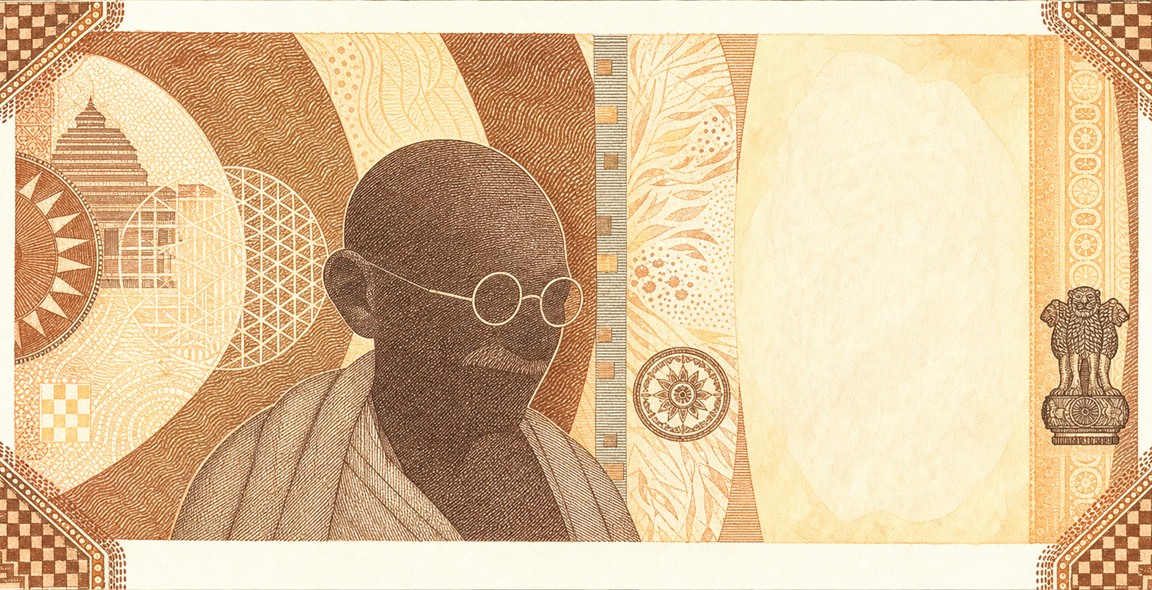
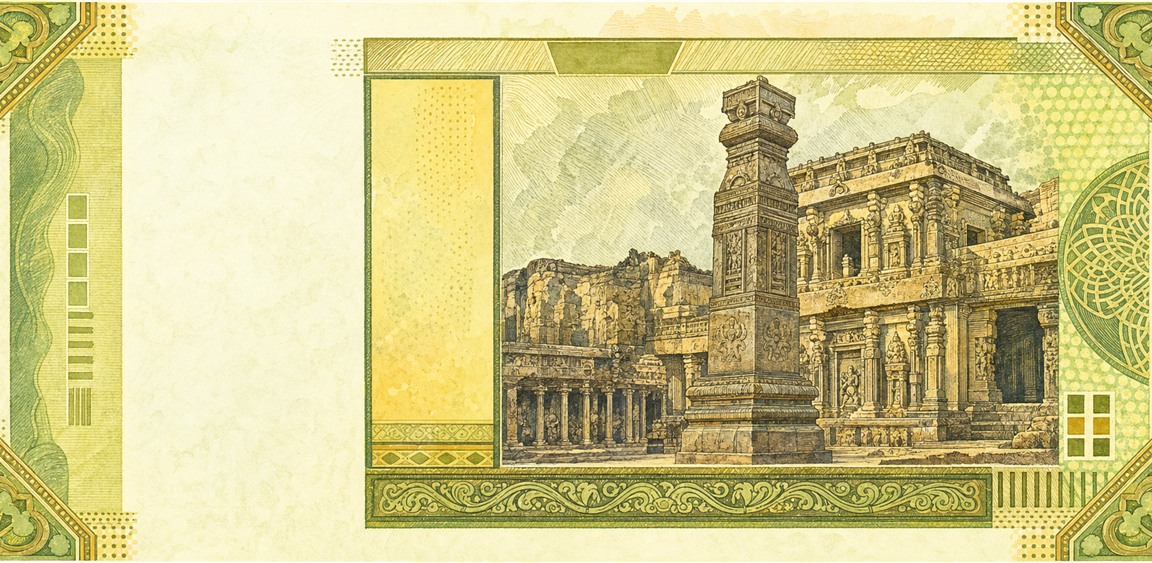
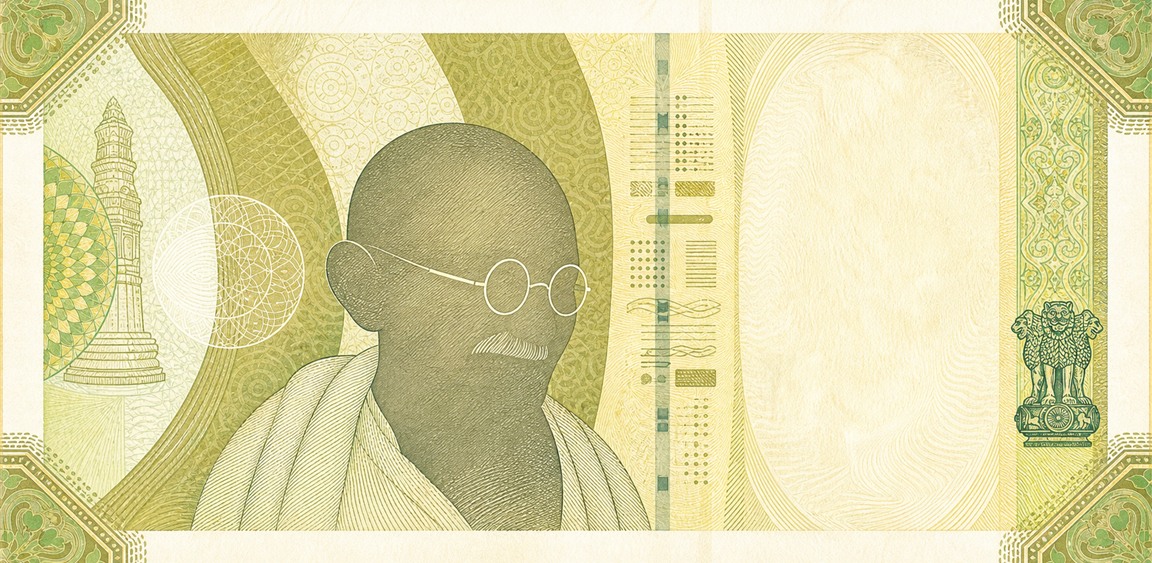
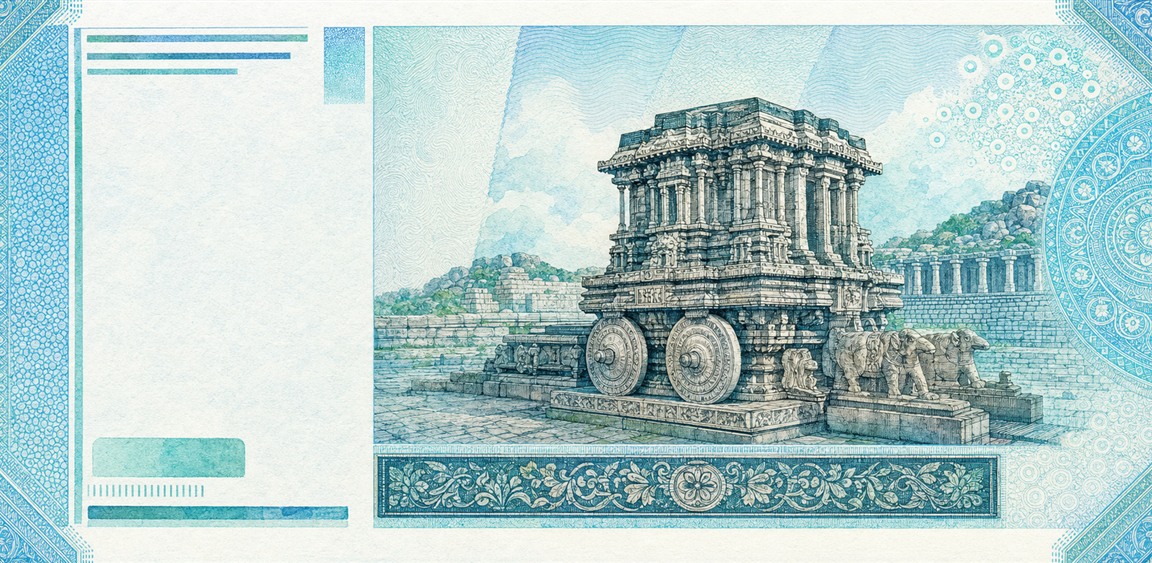
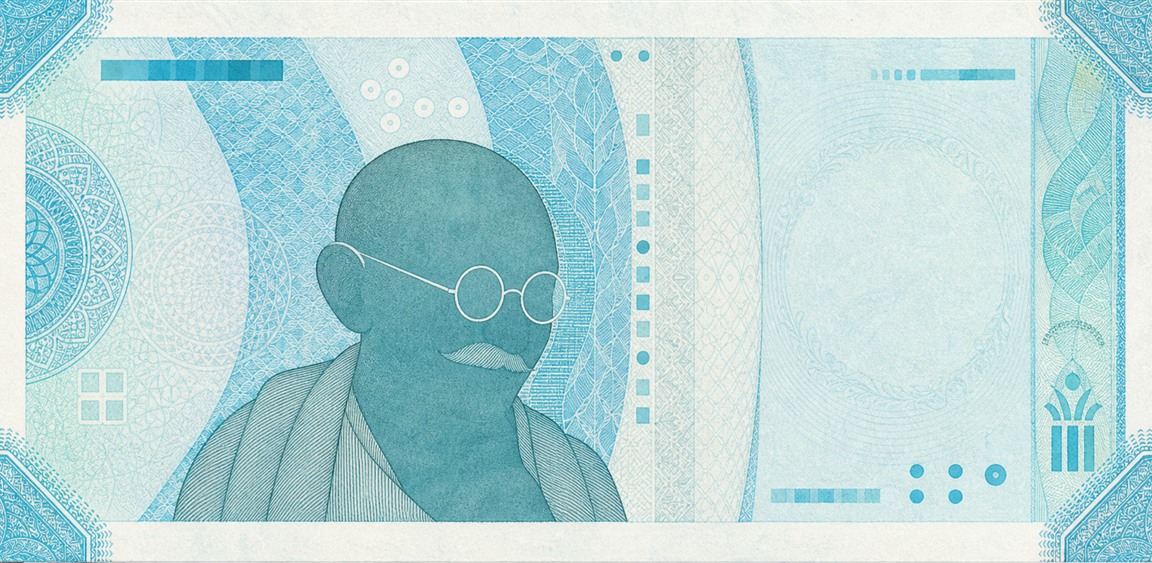
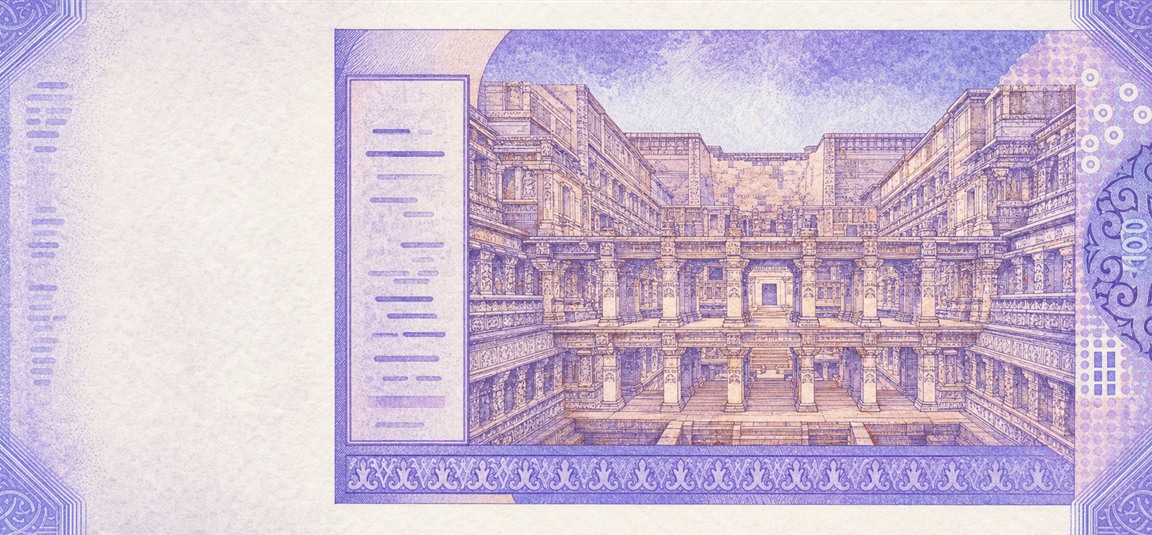
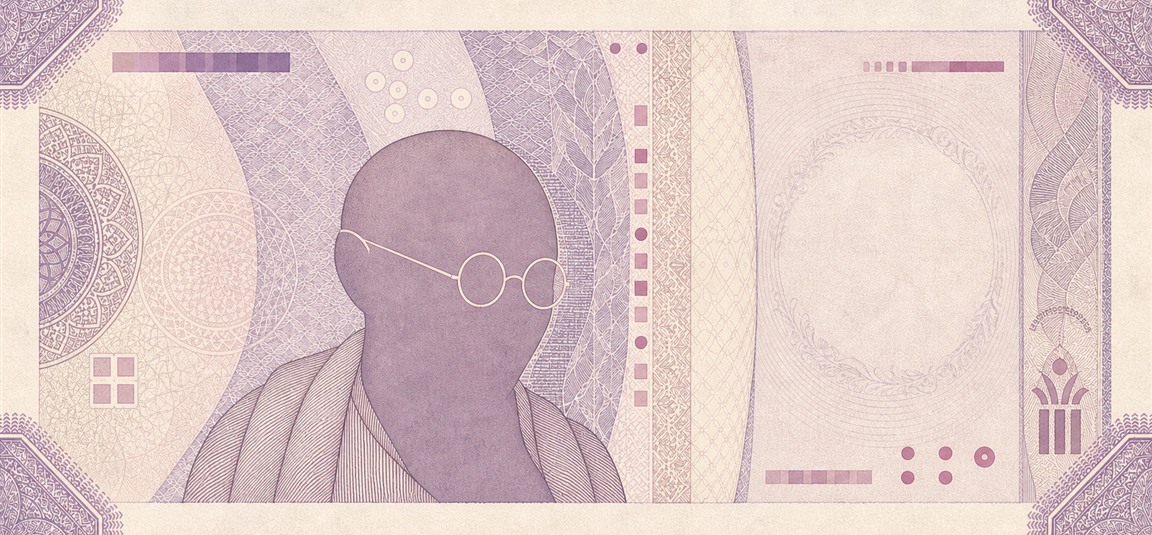

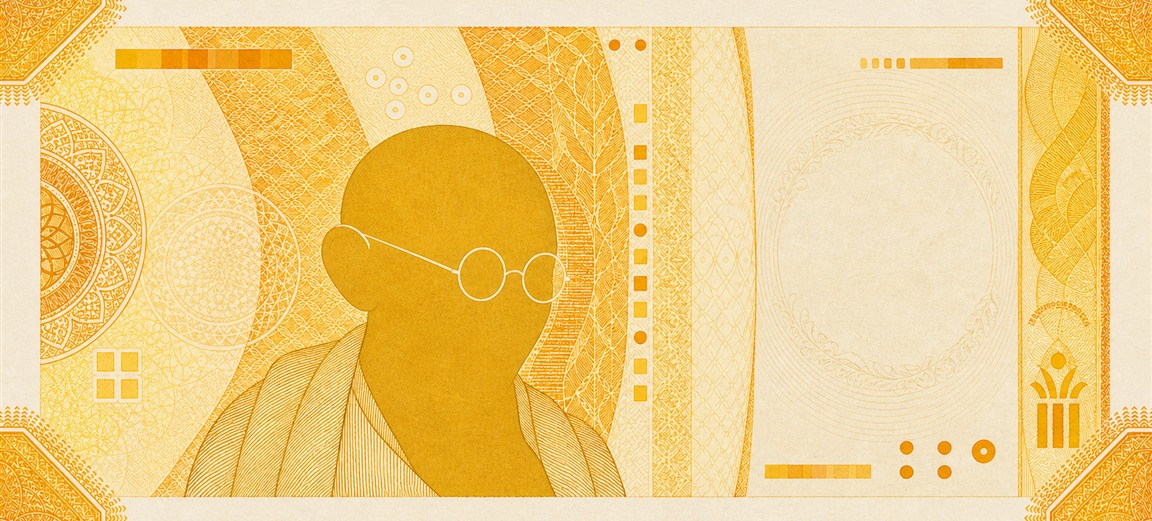
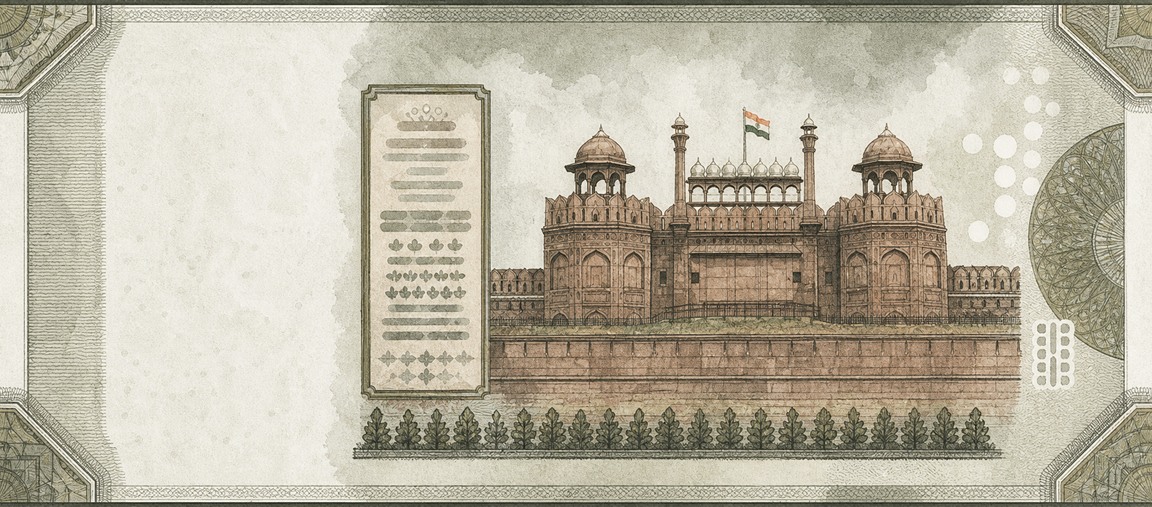
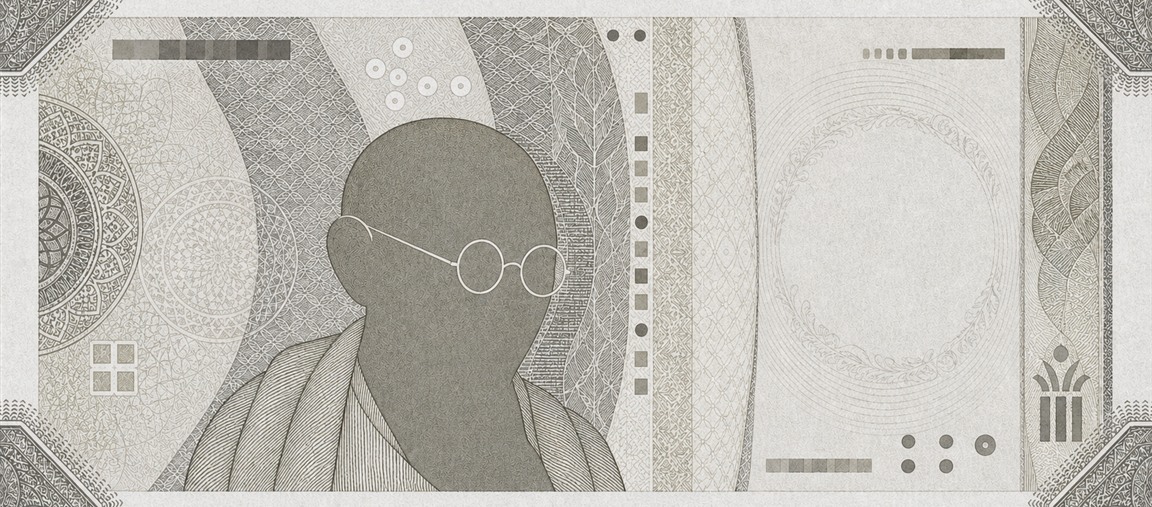
India's Mahatma Gandhi New Series places Gandhi on the front and turns the reverses into a route through national heritage, from the Konark wheel and Ellora to Hampi and the Red Fort. Cash by Country artwork is an original, simplified interpretation and is not legal tender.
Coins are more useful than they look
RBI says coins are currently issued in denominations of 50 paise and 1, 2, 5, 10 and 20 rupees. Coins below 50 paise are no longer legal tender. Keep 5, 10 and 20 rupees for small purchases and do not assume a small coin is worthless just because it looks unfamiliar.
Feel, look and tilt
RBI's note guidance emphasizes tactile and visual security features. On newer higher-value notes, the rupee symbol and denomination can shift from green to blue when tilted. Color helps you sort a wallet, but central-bank security features are the right test when authenticity is in doubt.