
Canadian cash looks familiar from a distance and wonderfully peculiar up close. The one-dollar coin carries a common loon, the two-dollar coin carries a polar bear, and the purple ten-dollar note stands vertically. A pocketful of change can tell you almost as much about the country as the notes.
Paper money
Canadian dollar notes use bright colour, transparent polymer windows and large numerals, making a Canadian wallet unusually easy to read quickly.




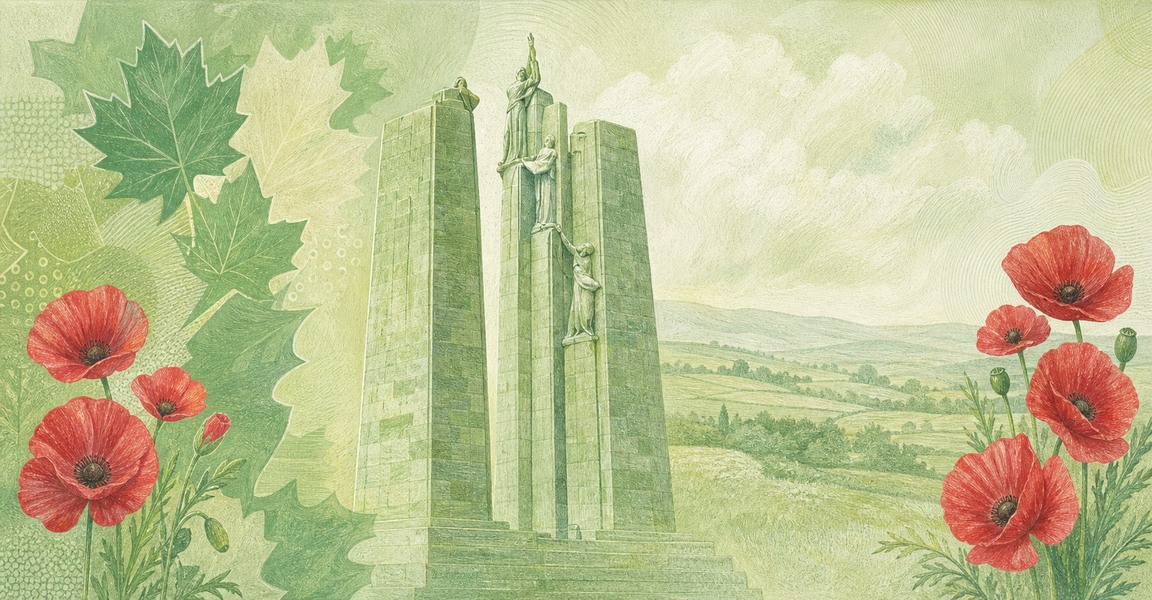
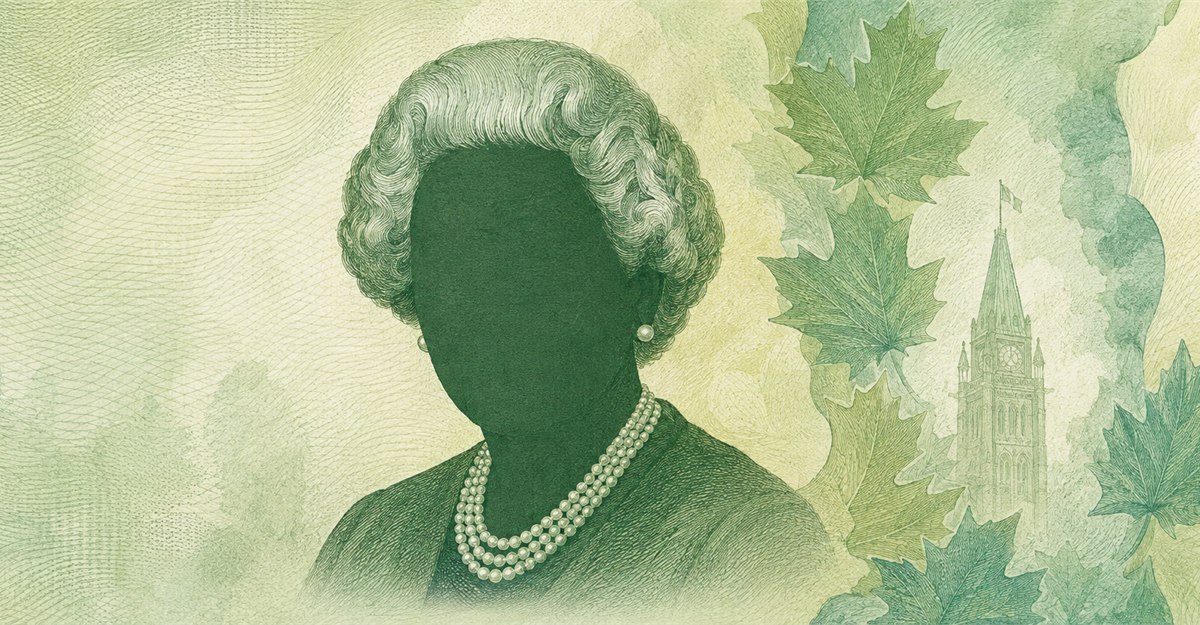




Canada's polymer series connects national stories with exploration, remembrance, science and human rights, using large transparent windows as part of the visual identity. Cash by Country artwork is an original, simplified interpretation and is not legal tender.
Five notes, one vertical surprise
Canada's current polymer family uses strong colours and transparent security areas. The C$5 is blue, C$10 purple, C$20 green, C$50 red and C$100 brown. The Viola Desmond C$10 broke the horizontal pattern in 2018 as Canada's first regularly circulating vertical banknote.
Meet the two coins with names
The penny vanished; the cent did not
Canada stopped distributing pennies in 2013, but prices, accounts and card payments still work to the cent. For cash only, the cashier rounds the final bill: totals ending in 1, 2, 6 or 7 cents round down; 3, 4, 8 or 9 round up; 0 and 5 stay put. Individual shelf prices are not rounded.
The fifty-cent coin is real but elusive
Canada also issues a 50-cent coin, yet it is rarely encountered in ordinary change. Do not build your day around finding one. Two quarters usually do the same practical job, while a fifty-cent piece is more likely to feel like a small discovery.
Feel, look, tilt and flip
Bank of Canada security guidance starts with four verbs. Feel for smooth polymer and raised ink, look through transparent areas, tilt for changing colour and detail, then flip the note to confirm that features work from both sides. Use several checks together rather than trusting colour alone.
A new king is coming, not yet your change
The Bank of Canada is preparing a new vertical C$20 featuring King Charles III and expects it in early 2027. A Terry Fox C$5 will follow later. Until the Bank announces circulation, the familiar Queen Elizabeth II C$20 remains ordinary current cash. Old valid polymer notes do not suddenly stop working when a new design arrives.